|

Cartref:
Home:
Newyddion:
News:
Llyfrau/Adolygu:
Books/Reviews:
Cerddi:
Poems:
Cysylltu:
Contact:
|
|
____________________________________________________
Biography.
News. Books.
Awards. Events. Music.
Art. Judge. Organisations.
Articles
Biography
Winner
of Wales Arts Council's Book of the Year Award
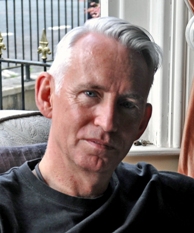 Grahame
Davies is a Welsh author, who has won numerous prizes,
including the Wales Book of the Year Award. Grahame
Davies is a Welsh author, who has won numerous prizes,
including the Wales Book of the Year Award.
As a
much-sought-after, Novello-nominated lyricist, he collaborates extensively with composers and
wrote the words for the song 'Sacred Fire', by composer Sarah Class,
which, performed by South African soprano Pretty Yende, was one of
the musical highlights of the Coronation of King Charles III in May 2023,
and was described by Andrew Lloyd Webber as 'mesmerising', and by
commentator Robert Hardman as 'exquisite'.
He is the
author of 19 books in Welsh and English, including: The Chosen People,
a study of the relationship of the Welsh and Jewish peoples; The Dragon
and the Crescent, a study of Wales and Islam; a novel, Everything
Must Change, about the French philosopher Simone Weil, and two popular
works of psychogeography, Real Wrexham, and Real Cambridge
A native
of Coedpoeth near Wrexham, now based in Powys and London, he has a degree
in English from Anglia Ruskin University, Cambridge, and a PhD from Cardiff
University, where he was later an honorary fellow in the department of religious
studies.
He was
awarded an honorary D.Litt from Anglia Ruskin University, and was
Vice-President of Goodenough College, London. He travels internationally
as a reader and lecturer, carries out numerous high-profile poetry
commissions, and collaborates extensively with musical and visual artists.
In 2020, he was awarded the L.V.O. (Lieutenant of the Royal Victorian
Order) in the Queen's Birthday Honours. In 2023 he was awarded an Honorary
D.Litt from the University of Aberdeen and the title of Honorary Professor
of Practice by the University of Wales Trinity Saint David. Also in 2023:
His Majesty The King made him a Commander of the Royal Victorian Order (C.V.O.).
In 2024, he became an Honorary Fellow of the Royal Welsh College of Music
and Drama. In 2025 he was made a Freeman of the Worshipful
Company of Goldsmiths and was awarded the Freedom of the City of London.
His poetry
has been translated into many languages and has appeared in publications
such as: The Times, The Times Literary Supplement, The
Guardian, Poetry London, the Literary Review in America,
Orbis (#136 Spring 2006), Yearbook of Welsh Writing in English,
Absinthe (Michigan, USA, 2007), Kalliope (Germany, 2009),
Poetry Review, and Everyman's Library Pocket Poets series Villanelles
(2012). His work is widely anthologised and is on the education syllabus
in Wales. __________________________________________________
News
'Sacred Fire' performed at Coronation
Song commissioned for Westminster Abbey service
Hymn commissioned by Royal Air Force
Premiere at Royal Albert Hall
Celebrating Wales-Ireland links
New folk song suite with Paul Mealor for Ar Log Books
-
New: A Darker Way, (Seren, 2024), second solo volume of English poetry.
- Real Cambridge (Seren, 2021) a volume of
psychogeography in the Real series, edited by Peter Finch.
- Alcemi
Dwr / Alchemy of Water (Gomer, 2013). With Tony Curtis, a bilingual
book of poems about Welsh lakes, rivers, shorelines and waterfalls,
with pictures by Mari Owen and Carl Ryan.
- Lightning
Beneath the Sea (Seren, 2012), first full-length book of poetry
in English.
- The
Dragon and the Crescent (Seren, 2011), an extensive study of the
relationship between the Welsh people and Islam as reflected in literature.
- Real
Wrexham (Seren, 2007), a work of psychogeography in the Real series
edited by Peter Finch. Reprinted 2009.
- Everything
Must Change (Seren, 2007), an English-language novel based on Rhaid
i Bopeth Newid.
- Gwyl
y Blaidd / Festival of the Wolf, Eds. Tom Cheesman, Grahame Davies
and Sylvie Hoffman (Parthian/Hafan, 2006). An anthology of work by and
about refugees and asylum seekers in Wales.
- Achos,
(Barddas, 2005), third volume of original Welsh-language poetry.
- The
Big Book of Cardiff, Eds. Peter Finch & Grahame Davies (Seren, 2005),
an anthology of contemporary writing about Cardiff.
- Rhaid
i Bopeth Newid, (Gomer, 2004), first novel, longlisted for the £10,000
Book of the Year prize, 2005.
- Nel
país de la borrina. (VTP Editorial, 2004) selection of Welsh poetry
in Asturian translation.
- No
país da brétema (VTP Editorial, 2004) selection of Welsh poetry
in Galician translation.
- Ffiniau/Borders,
(Gomer, 2002), a bilingual volume of poetry jointly with Elin ap Hywel.
- The
Chosen People, (Seren, 2002), a study of the relationship of the
Welsh and the Jewish people as reflected in literature.
- Cadwyni
Rhyddid, (Barddas, 2001), second volume of Welsh-language poetry,
winner of the Wales Arts Council's 2002 Book of the Year award at the
Hay on Wye Festival of Literature, together with a prize of £3,000.
Reprinted 2001.
- Oxygen,
(Seren, 2000). With Amy Wack a bilingual anthology of Welsh poets aged
under 45.
- Sefyll
yn y Bwlch, (University of Wales Press, 1999), a study of the anti-modern
movement in the 20th Century, as seen in the work of R.S.Thomas, Saunders
Lewis, T.S. Eliot and Simone Weil.
- Adennill
Tir, (Barddas, 1997), first Welsh-language poetry book, awarded
the Harri Webb Memorial Prize.
Major
Awards, Honours, Scholarships etc:
- 2025: Novello Classical Music Awards, Nomination for Gresford:
Up from Underground.
- 2025: Freedom of the City of London
- 2025: Freeman of the
Worshipful Company of Goldsmiths.
- 2024: Honorary Fellowship of Royal Welsh College of Music and
Drama
- 2023:
Commander of the Royal Victorian Order (C.V.O.) The King's
Special Honours.
- 2023:
Honorary Professor of Practice, University of Wales Trinity Saint
David.
- 2023:
Honorary D.Litt. University of Aberdeen.
-
2022: Vers Libre Prize at National Eisteddfod of Wales.
2020: Lieutenant of the Royal Victorian Order (LVO), The Queen's
Birthday Honours
2017:
Poem Suitable for Song prize. National Eisteddfod of Wales
2016:
Sonnet prize, National
Eisteddfod of Wales
2011:
Literature Wales Bursary for poetry project.
2010:
Honorary D.Litt. Anglia Ruskin University, Cambridge
2009:
Ruth Howarth Literature Award for Real Wrexham
2008:
Honorary Research Fellowship, Cardiff University.
2007:
Academi Bursary Award for Wales and the Muslims.
2004:
Academi Bursary Award for Everything Must Change
2004:
Fellowship of Goodenough College, London.
2004:
Poem of tribute, National Eisteddfod of Wales.
2004:
Longlist for Book of the Year award for Rhaid i Bopeth Newid
2002:
Welsh Arts Council Book of the Year Award for Cadwyni Rhyddid.
2001:
Winner, Stomp Eisteddfod Genedlaethol Dinbych, Yr Academi.
1998:
Welsh Arts Council Writer's Bursary Award for Wales and the Jews.
1997:
Harri Webb Memorial Poetry Prize for Adennill Tir.
1994:
Vers Libre Prize at National Eisteddfod of Wales.
Major
Commissions, Residencies, Visits, Festivals, Lectures.
-
2025: Poetry reading and panel discussion on Welsh religious poetry
with Rowan Williams and Paul Mealor at the Edinburgh Festival of the
Sacred Arts.
-
2025: Lecture on Bryan Martin Davies, Radio Cymru Tocyn Wythnos studio
interview and Cerddi'r Ffin poetry reading at National Eisteddfod of
Wales.
-
2025: Deus vs Machina: reading with Peter Finch at the Brecon Choir
Festival.
-
2025: Reading at Maesyronnen Chapel for the Brecon Choir Festival.
-
2025: Lecture on R.S.Thomas at the R.S.Thomas and M.E.Eldridge
Festival at Aberdaron.
-
2025: Poetry reading, Wrexham Carnival of Words
-
2025: Visit to Rome to teach dream interpretation to postgraduate
study group from Goodenough College.
-
2024: Reading at the Knighton Festival, Powys.
-
2024: Reading at The North Wales International Music Festival,
St Asaph.
-
2024: A Scottish Prayer, composed by Paul Mealor, performed
at Crathie Kirk in the presence of Their Majesties King Charles III
and Queen Camilla, on the second anniversary of the Accession.
-
2024: Reading and lecture at the North American Festival of Wales,
Pittsburgh, U.S.A.
-
2024: Series of readings and lectures in Atlanta, Georgia, U.S.A.
-
2024: BBC
Radio Cymru, Rhaglen Ffion Dafis.
-
2024: BBC Radio Wales, Roy Noble Programme.
-
2024:
Guardian Poem of the Week, 'The Journalist'.
-
2024: Writing With Light festival with Sarah Class, Hay Castle.
-
2024: Reading at The Three Streams Festival, Llantwit Major.
-
2024: Reading at The Athenaeum Club, London.
-
2024: Reading at The Royal Overseas League, London.
-
2024: Reading at The Chapel Royal, London.
-
2024: Lecture at Jesus College, Oxford.
-
2023: Reading at The Three Streams Festival, Llantwit Major.
-
2023: Reading at St Davids Festival of Ideas.
-
2023: Reading at Ancient Connections Pilgrimage Conference,
Inniscorthy, Co.Wexford, Ireland.
-
2022: Queen's English Society: lecture on The English Ghost Story.
-
2022 Interview as prizewinner at National Eisteddfod of Wales.
-
2022. Reading at Abbey Hall Creative Space, Eye,
Suffolk, for the River Waveney Trust
-
2022: Reading at These Three Streams Festival, Llantwit Major.
-
2021
Lecture to The Honourable Society of Cymmrododion, Wales and Islam.
-
2020 North Wales International Music Festival,
St Asaph Readings and interview
- 2019
Residency at Jam on the Marsh Festival, New Romney, Kent
-
2018
Residency at Jam on the Marsh Festival, New Romney, Kent
- Hiraeth-
Erzolirzoli Wales-Cameroon anthology, edited by Eric Ngalle
Charles
- 2018
Museum of the Moon reading, Tintern Abbey, for Wye Valley Festival
- 2017 Teaching
three-day creativity seminar in Vienna, Austria, for Goodenough College,
London.
- 2016 Sequence
commissioned to commemorate the 50th anniversary of the Aberfan Disaster,
with Tony Curtis and photographs by I.C. Rapoport
- 2016 Edge
Festival, Solva, Pembrokeshire
- 2016 Llangwm
Festival, Pembrokeshire
- 2016 Keynote
speech at opening of international conference of the British Institute
of Middle Eastern Studies, Lampeter.
- 2016:
Chairing British Council discussion on Shakespeare and Wales at Chapter
Arts Centre, Cardiff, with Gwyneth Lewis and Rakie Ayola.
- 2016:
Reading with Kevin Crossley Holland, Temenos Academy, Lincoln Centre,
London.
- 2014:
Reading with Kevin Crossley Holland, Pembroke College, Cambridge Festival
of Ideas
- 2014:
'Meddwl' philosophy conference, Aberystwyth
- 2014:
Poem for Sacred Site and Sound Festival, Tintern.
- 2013:
Poem for 'Ode to Samarkand' festival, Uzbekistan.
- 2013:
Cambridge Festival of Ideas.
- 2013:
Chelmsford Festival of Ideas.
- 2013:
PENfro Literary Festival, Pembrokeshire.
- 2013:
Hay Festival, launch of Alchemy of Water and R.S.Thomas centenary
event
- 2012:
Guardian Poem of the Week, 'Departed'.
- 2011:
Oxfam Poetry series, London.
- 2011:
Cambridge Festival of Ideas, Panel discussion on mythology.
- 2011:
Centre for Advanced Welsh and Celtic Studies, Aberystwyth, 'The Crescent
and the Welsh.'
- 2011:
Cambridge Muslim College; 'Wales and Islam'.
- 2011:
Carnhuanawc Lecture; 'Wales and Islam': Eisteddfod Genedlaethol Cymru.
- 2011:
Lecture on Bryan Martin Davies with Elin ap Hywel, Eisteddfod Genedlaethol
Cymru
- 2011:
BBC Wales All Things Considered programme.
- 2011:
Hay Festival, session on The Dragon and the Crescent
- 2010:
'On the Border' series session with John Hegley at Chepstow.
- 2010:
Half-hour BBC Radio Four Great Lives programme about Simone Weil,
with Eleanor Bron.
- 2009:
North American tour: readings and artistic collaborations in Pennsylvania,
Vermont and New York. Wales Arts International.
- 2009:
Greenbelt Festival, Cheltenham, UK.
- 2009:
Harvard University, U.S.A. Lecture.
- 2008:
Readings in Guglionesi, Italy.
- 2008:
Five literary readings in Argentina.
- 2007:
North American tour: readings and launch of Everything Must Change
in Delta, Pennsylvania; Westport, Connecticut, and Chrysler Building,
New York, and lecture at Yale University, Massachussetts. Wales Arts
International.
- 2007:
Memorial Poem for Children's Commissioner for Wales.
- 2007:
Hay on Wye Festival of Literature, Readings. Launch of 'Poets' Portraits'
exhibition.
- 2007.
Imperial College, London. Lecture.
- 2007:
Artist in Residence in Summer school of the British Centre for Literary
Translation, University of East Anglia, Norwich.
- 2007:
Subject of half-hour BBC Wales All Things Considered programme
- 2006:
Delta, Pennsylvania. Readings
- 2006.
Cape Town, South Africa. University of the Western Cape. Lecture.
- 2005:
Madrid, Spain. Launch of La Pais de la Borrina. British Council.
- 2005:
Canu'n Rhydd conference, Llandudno, Academi. Readings and panel.
- 2005.
Limerick University, Ireland. Lecture.
- 2004:
Poesiefestival, Berlin. Translation workshops and readings. British
Council / Welsh Literature Abroad
- 2004:
Israel and Palestine. Fact-finding visit. Israeli Foreign Ministry.
- 2004:
Greenbelt Arts Festival, Cheltenham. Readings and workshops.
- 2004:
NAASWCH Conference, Morgantown, WV, USA. Lectures.
- 2004.
Subject of half-hour Dechrau Canu Dechrau Canmol programme
- 2003:
Commission by Academi for Great Cardiff Poem
- 2003;
Commission by HRH Prince of Wales for poem for Llangollen Eisteddfod.
- 2003:
Edmonton, Canada. Lecture and readings at 'Culture and the State' conference.
British Council.
- 2002:
Sofia, Bulgaria. Readings and launch of Plamak Welsh edition.
British Council.
- 2002:
Lublin, Poland. Lecture. British Council.
- 2002:
NAASWCH conference, Syracuse, NY. U.S.A. Two lectures.
- 2002:
College of William and Mary, Williamsburg. U.S.A. Lecture.
- 2002:
Commission by Wales Millennium Centre for poem for laying of foundation
stone.
- 2002.
Hay on Wye Festival of Literature, Readings.
- 2001:
Argentina, British Council.
- 2001:
European Round Table on Poetry, Riga, Latvia. Readings. British Council.
- 2000:
Wexford, Ireland. Reading. Academi.
- 2000:
Royal Festival Hall, London. Reading.
Musical
collaborations:
- 2025: Opera,
Gresffordd: I'r Goleuni Nawr, with music by Jon
Guy, performed in all-Welsh language version on the mainstage at
National Eisteddfod of Wales in Wrexham.
- 2025: 'The Signs Still Point the Way', written by Sir Karl Jenkins for the of the BBC Symphony Orchestra
and BBC Singers, is a Radio Three 'Sounds of the Century'
commission to mark the first 25 years of the millennium.
- 2025: 'A Day May Come', anthem for 50th anniversary of VE Day,
with music by Debbie Wiseman and performed by Voces 8, reaches
Number One in iTunes classical downloads.
-
2024: 'Send the Angels Again', choral work for composer
Jago Thornton and Suzi Digby’s VOCE Chamber Choir premiered at St
George’s Bloomsbury, November 8th
- 2024:
Simffoni Mara, choral work for composer Paul Mealor premiered
at St David's Cathedral by Ysgol Gerdd Ceredigion.
- 2024: Opera,
Gresford: Up from Underground, commissioned
by the North Wales International Music Festival, with music by Jon
Guy, performed five times in St Asaph and Wrexham by the NEW
Sinfonia and a community chorus to commemorate 90 years since the
Gresford mining disaster of 1934.
- 2024: Four short operas:
Caravaggio; War Requiem; The
Canonisation of Derek Jarman and Wittgenstein, for
the JAM on the Marsh Festival, with Jago Thornton; Roseanna Dunn,
Sam Buttler and Toby Anderson.
- 2024: In Primum Non Nocere,
based on the Hippocratic Oath, commissioned by the Royal Society
of Medicine to music by Paul Mealor and performed by ORA Singers
at the Grosvenor Chapel.
-
2024: The Spark of Life, commissioned by the Royal
Humane Society to music by Nigel Hess and performed at St
Paul's Cathedral.
- 2023: 'The Saviour in the Shawl', Christmas carol by Sarah
Class recorded with the BBC Concert Orchestra, and the BBC
Singers.
- 2023: 'Windrush' by Debbie Wiseman, with words by Grahame
Davies, is recorded by Sir Willard White to mark the 75th
anniversary of the arrival of the Windrush.
-
2023:
'Sacred Fire', commission by King Charles III for The Coronation at Westminster
Abbey on May 6th, with music by Sarah Class and words by Grahame
Davies is performed by South
African soprano Pretty Yende.
-
2023: 'Coeden Cyfiawnder / The Justice Tree' by
Edward-Rhys Harry with words by Grahame Davies, commissioned for
the opening ceremony of the Commonwealth Magistrates and
Judges Association Conference, held in Cardiff.
- 2023:
'Three Things', song by Paul Mealor to words by Grahame Davies
receives world premiere, performed by Apolllo 5 at Cadogan Hall in
London on June 2nd, in Vox Anima London's concert 'The Music and
Lineage of Paul Mealor'.
- 2023: Y Ddwy Chwaer (The Two Sisters), commissioned for the St David's Cathedral Festival for the Ancient Connections
project with Paul Mealor, performed by Ar Log at the Cathedral on
March 4.
- 2023: 'Today We Ask', anthem commissioned for a Coronation
Celebration at St Paul's Church, Covent Garden, London, to music
by composer Peter Boyer, performed by Ora Singers.
- 2023: 'Gelert', opera by Paul Mealor and
Grahame Davies performed in Minneapolis/St Paul, Minnesota,
U.S.A., August 4-5.
- 2022: 'Unitas in Sapienta', anthem
for Goodenough College, London, set to music by Jamie Wesley.
- 2022: 'A Welsh Prayer' performed at the Service of Remembrance for
Her Majesty The Queen, Llandaff Cathedral, September 16, in the
presence of Their Majesties The King and The Queen Consort.
- 2022: Libretto for community Opera
Gelert
with Paul Mealor for the North Wales International Music Festival,
September 24.
- Composer Celia
Harper sets Grahame Davies’s poem ‘Prayer for the Dying’ to music,
performed by Chiswick Baroque at Church of
St Vincent de Paul, West London.
- 2022: Libretto for Gorau Awen Gwirionedd, Choral Symphony with
Eilir Owen-Griffiths, commissioned for the bicentenary of the
University of Wales Trinity St David, November 12.
- 2022: 'This Faithful Life', by Sir Karl Jenkins, commissioned by
Swansea Festival of Music and the Arts for a Jubilee Concert on
October 29.
- 2022: 'What Time Has Taught', choral work, by Roderick Williams,
commissioned for the Platinum Jubilee and performed at The Queen's
Chapel, London, May 30, by Roderick Williams and the Gentlemen of The
Chapel Royal.
- 2022: 'A Blessing for Bendigeidfran', by Edward-Rhys Harry,
commissioned by London Welsh Male Voice Choir, performed at St David's
Cathedral, on May 7th.
- 2022: 'O Beata Trinitas', by Grahame Davies
and Paul Mealor, is performed at the enthronement of the new
Archbishop of Wales, the Most Revd. Andy John, at Bangor Cathedral on
April 30.
- 2022: 'Per Ardua Ad Astra',hymn
commissioned by the Royal Air Force, for composer Paul Mealor,
premiered at Classic FM Live at the Royal Albert Hall, April 11.
- 2022: Poem and reading on the music video for the song
'Blackbird' by composer and songwriter Sarah Class
- 2022.
Choral work, 'In This Place' with Paul Mealor, commissioned by Marlborough College
and premiered on March 20, 2022.
- 2021.
Musical theatre show Adre' Dros 'Dolig / Home for Christmas with Eilir Owen-Griffiths for Côr
CF1 and MA students of University of Wales Trinity St David.
- 2021 Song
commission 'Between the Valley and the Sea' with Robert Arwyn for
Barry Male Voice Choir.
- 2021.
Song commission 'The Blessing of Belonging' with Paul Mealor for
Cantorion Rhos conducted by Matthias Wurz.
- 2021. Commission'Between the Stormclouds and the Sea', with Jack Oades to celebrate Romney Marsh for the JAM on
the Marsh Festival in Kent, premiered in July 2021.
- 2020.
Commission, 'O Beata Trinitas' with Paul Mealor to commemorate the
centenary of the founding of the Church in Wales, premiered at special
service at St Davids Cathedral in July 2021 in the presence of HRH The
Prince of Wales.
- 2020.
Commission of new sequence of poems in response to the Covid-19
pandemic to accompany a performance of Faure's Requiem at the JAM on
the Marsh Festival in Kent, to be premiered August 14, 2020.
- 2020.
"Stronger for the Storm", composed with Paul Mealor for the
international peace project iPlay4Peace.
- 2020.
Commission with Paul Mealor
to commemorate the 700th anniversary of the Declaration of Arbroath, Scotland,
for performance in April 2021.
- 2020.
Commission of 'Song of the Oceans' with Paul Mealor for 'Science
Sings' at the University of Aberdeen honorary degree ceremony, January 2020.
Later recorded with the Philharmonia Orchestra in 2021.
- 2019.
Premiere of 'Song for Samhain' by composer Celia Harper for the Music
and Silence concert by Chiswick Baroque at the church of St Vincent de
Paul, Osterley, London, November 3rd 2019.
- 2018.
The Souls of the Righteous' New York premiere of Mass by Paul Mealor
to commemorate the centenary of the Armistice commissioned by the Chapel
Royal of Scotland, Carnegie Hall, New York, November 11.
- 2018.
'A Glasgow Elegy' premiere of new choral work by Tom Harrold with
words by Grahame Davies to
commemorate the centenary of the Armistice, commissioned by Glasgow
University, Glasgow, November 10.
- 2018.
'The Souls of the Righteous' Edinburgh premiere of Mass by Paul Mealor
with words by Grahame Davies to commemorate the centenary of the Armistice commissioned by the
Chapel Royal of Scotland, Edinburgh, September 22.
- 2018.
'Voices of Vimy' London premiere St Bride's, Fleet Street, and broadcast
in full on BBC Radio 3.
- 2018 'A Song for the Lord Mayor of London', by
Paul Carroll for the Commonwealth Children's Choir to mark the
Commonwealth Heads of Government meeting in London.
- 2017.
Carol by composer Jack Oades, with words by Grahame Davies, performed
at St Bride's, Fleet Street, London, on December 21st
- 2017
'Voices of Vimy', words for commission to commemorate the centenary
of the Battle of Vimy Ridge with composers Tom Harrold and Stuart Beatch,
with words by Grahame Davies for Pro Coro Canada and the JAM Festival.
- 2017.
'Propempticon' by Grahame Davies set to music by Kevin Hutchings, the
Canadian singer-songwriter, for his new album Watershed Sessions.
- 2017
Words for 'Jack', a song by Paul Carroll with words by Grahame Davies in memory of Jack Cornwell,
who won the VC at the Battle of Jutland in 1916, performed by the Commonwealth
Youth Choir and the band of the Coldstream Guards, yn Horseguards Parade,
London, to mark Commonwealth Day.
- 2017
'Gorffwysgan Hedd Wyn', by Paul Mealor, with words by Grahame Davies,
commissioned by the
National Eisteddfod of Wales to commemorate the centenary of the death of the
Welsh war poet Hedd Wyn.
- 2016
'The Shadows of War', by Paul Mealor, Welsh premiere at St David's Hall,
Cardiff, with the Royal Liverpool Philharmonic Orchestra conducted by
Owain Arwel Hughes.
- 2016
'The Shadows of War', a new commission by Paul Mealor with words by
Grahame Davies to commemorate
the centenary of the Battle of the Somme, Jam on the Marsh Festival,
New Romney, Kent, with the London Mozart Players and the Mousai Singers.
- 2016
'Wrth Ddwr a Thân / By Water and Fire', composed by
Paul Mealor with words by Grahame Davies commissioned for the opening of the Fifth National Assembly for Wales
by Her Majesty The Queen, Y Senedd, Cardiff, June 7, 2016.
- 2016
Words for section of new choral work 'Jubilate Deo' by Paul Mealor for
The Distinguished Concerts Orchestra and Distinguished Concerts Singers
International, conducted by the Grammy-nominated Dr James Jordan, at
Carnegie Hall, New York.
- 2016
Words for new choral work by Paul Carroll for the 90th Birthday of Her
Majesty The Queen for the Commonwealth Youth Orchestra and Choir.
- 2015
Settings of 'Weather Forecast', 'Waiting' and 'Propempticon' by composer
Celia Harper, performed by mezzo soprano Claire Bradshaw and violinist
David Juritz at Burton Bradstock Festival in Dorset
- 2014:
Words for 'Spirit of Hope' by Paul Mealor to mark 20 years of democracy
in South Africa, premiered in Cape Town in April with Only Kids Aloud
and Bryn Terfel.
- 2013:
Words for 'A Welsh Prayer' by Paul Mealor to mark the 65th birthday
of HRH The Prince of Wales, at North Wales Music Festival, St Asaph.
- 2013:
'When you have to leave"' set to music by Canadian singer-songwriter
Kevin Hutchings for the album, Shadows in the Light.
- 2012:
Words for 'The Hero's Journey', a new choral work by Sir Karl Jenkins,
performed by a 500-voice male choir at Royal Festival Hall, London,
on July 7, 2012, and a 1,000-voice choir at the Royal Albert Hall, London,
on October 13, 2012.
- 2012:
Words for multi-media project about Gelligaer Common with visual artist
Gigi Jones, composer Mervyn Burtch and poet Tony Curtis.
- 2011:
Words for part of the score by Sir Karl Jenkins for the BBC Wales television
history series, The Story of Wales.
- 2011:
Words for 'Benedictus' in Celtic Mass by U.S. choral and orchestral
composer Ben Allaway
- 2010:
'Homecoming' set to music by Canadian singer-songwriter Kevin Hutchings
for the album, Light to Shine.
- 2010:
Words based on sacred literature from several religions for a new setting
of the Gloria by Sir Karl Jenkins, performed for the first time
in the Royal Albert Hall, London, July 11, 2010.
- 2009 English
words for a recording of Sir Karl Jenkins' 'Cantilena' by the pop star
Rhydian for the album O Fortuna on the Syco Label.
- 2009:
Words for a new commissioned choral work by Sir Karl Jenkins, 'Ysbrydoliaeth'
('Inspiration') performed at the Wales Millennium Centre, November 14.
- 2009:
Words for 'O Beata Trinitas' for Sir Karl Jenkins to mark university
status of Trinity College, Carmarthen.
- 2009 Several
poems set to music for album of Kevin Hutchings, Canada, On the Bridge
You Were Burning.
- 2008:
Commission to provide words and translations for a new setting of the
Stabat Mater by Sir Karl Jenkins as part of the events for European
City of Culture, Liverpool, 2008. Published on album Stabat Mater
(EMI Classics).
- 2008:
Lyrics for a number of songs for the album Adnodau gyda Blodau
for the rock band Catsgam.
- 2007:
Welsh words for a new setting of the Largo from the New World Symphony
by Dvorak, and for a new setting of 'Cantilena', by Sir Karl Jenkins
on album This Land of Ours (EMI Classics).
- 2007:
Panellist on day school on the libretto, for Academi and Music Theatre
Wales.
- 2006:
Welsh translation of 'The Mystics' performed by Dame Kiri te Kanawa
on the Karl Jenkins album Kiri Sings Karl. (EMI Classics).
- 2006:
Poems set to music by rock band Malarki on album Malarki.
- 2005:
Sir Karl Jenkins album, Requiem, (EMI Classics), including a
setting of the poem 'Llwyd', reaches Number One in the classical charts.
- 2005:
Commission from Opus and Barcud Derwen for opera libretto Taliesin
for Sir Karl Jenkins.
Visual
and public art collaborations
- 2022: Inscription for memorial stone on the
Cheng Yu Tung Building at Jesus College, Oxford.
- 2022: Poetry for sculpture in the restored
Castle in Hay-on-Wye, Powys.
- 2020:
Poems for a mural artwork by artist Ceri Davies for the Secular
Pilgrimage project at Tintern Abbey, Monmouthshire.
- 2018:
Collaboration with artist Kate Walters for the JAM on the Marsh
Festival, Kent, July 2018.
- 2017:
Painting of Grahame Davies by Roy Guy installed at the Soar Welsh-language
cultural centre, Merthyr Tydfil
- 2016:
Work on public poetry for artworks by sculptor Rebecca Gouldson in Merthyr
Tydfil
- 2014:
Poem for painting by Roy Guy commemorating Prince of Wales Colliery
disaster, Newbridge Memorial Hall
- 2012:
Words for sculptures on artwork trail in Brecon to mark the year of
the 2012 Olympics
- 2011 Words
for sculptures by Adam Williamson along Green Journeys cycle path at
Maesteg.
- 2009 Commission
for Welsh words for statue of Ivor Novello at Wales Millennium Centre,
Cardiff.
- 2008 Poems
are incorporated into sculptured benches as part of redevelopment of
Merthyr Tydfil town centre.
- 2008:
Collaboration with the visual artist Helen Stiff for Eisteddfod Genedlaethol
Cymru.
- 2006.Poem
commissioned by the sculptor Nigel Talbot and included in his artwork
as part of his exhibition Salvage..
- 2006:
A portrait of Grahame Davies by Lorraine Bewsey is one of 20 pictures
in her exhibition, Portreadau'r Beirdd / Poets' Portraits.
- 2004:
Poems included on sculptures by Nigel Talbot at several locations on
the Taff Trail, at Abercynon, Aberfan, Cefn Coed y Cymmer.
Membership
of organisations
- 2025: Freeman of the City of London
- 2025: Governor, Christ College, Brecon.
- 2025: President; Aberhonddu Male Voice Choir
- 2025: The Worshipful Company of Goldsmiths: Freeman
- 2022- The Athenaeum, Pall Mall, London.
- 2020 -2022
Vice-President, Goodenough College, London.
- 2019 -
2022 Trustee, Goodenough College, London.
- 2017 -
2022
Chairman of Academic Committee, Goodenough College, London.
- 2014 -
Vice-President Llangollen International Musical Eisteddfod.
- 2013 -
2022 Governor, Goodenough College.
- 2011-2012:
Board of Literature Wales.
- 2008-2011:
Honorary research fellowship, Cardiff University.
- 2007-2012:
National Library of Wales Advisory Board
- 2006-2009:
Board of Displaced People in Action.
- 2006-
Society of Authors
- 2005-2011:
Board of the Academi
- 2004-
Fellowship of Goodenough College, London.
- 2003-2008:
Management committee of Cyfrwng, the media journal in Wales
- 2002-
Associate Lecturer, Creative Writing, Welsh Department, Cardiff University.
- 2002-2012
BAFTA Cymru
- 2002-2006
Standing Liturgical Advisory Committee of the Church in Wales
- 2001-2006
External Examiner, Media and Communication Course, MA and BA, University
of Wales, Bangor
- 1997:
Membership of the Welsh Academi.
- 1997-2002
Welsh-language Editor Poetry Wales magazine.
Judge
-
2025: Recitation, National Eisteddfod of Wales
- 2015:
Undercurrents Festival, Caerphilly county.
- 2014:
Undercurrents Festival, Caerphilly county.
- 2014:
Dylan Thomas International Poetry Award.
- 2011:
Literature Medal at National Eisteddfod.
- 2011:
Chair competition (learners) at National Eisteddfod.
- 2007:
John Tripp Award for Spoken Poetry, Cardiff round.
- 2007:
Wrexham Festival Poetry Competition, Welsh and English.
- 2006:
Literature Medal at National Eisteddfod.
- 2005:
Bafta Cymru judging panel: Best Magazine/Feature Programme
- 2005:
Wrexham Festival Poetry Competition, Welsh and English.
- 2004:
Chair of Welsh-language judging panel for Book of the Year Award.
- 2003:
John Tripp Award for Spoken Poetry
- 2002:
Eisteddfod Rhyng-Golegol, Free verse competitions.
|
|
|

