
|
|
Llyfrau/Adolygu: |
 |
REVIEWS
A Darker
Way
"And, yes, they did those murals. You can tell? Sheenagh Pugh Reading
A Darker Way by Grahame Davies is
like gazing at a riot of flowers in a garden, a treasure trove of
colourful discoveries, an archway into the magical world of the short
form. Eric
Ngalle Charles,
Nation Cymru Author, poet, editor, librettist and literary critic Grahame Davies was brought up in the former coal-mining village of Coedpoeth, near Wrexham, in north-east Wales. His former career as a journalist and producer earned him a number of Welsh and industry awards. In 1999 his study of Wales and the anti-modern movement, the product of his doctoral research, was hailed as a landmark achievement in the field of literary criticism and he has been the recipient of many awards for his contributions to poetry. In 2023 he was made a Commander of the Victorian Order (CVO). A Darker Way brings together a collection of poems and songs which explore the human psyche. The spiritual realm is never far from his work but Davies is not a poet who sees things in simplistic terms: belief and unbelief are held in equal measure. These questioning poems impress us with their honesty. In ‘Seeking’ we are invited to listen to “the sea’s insistent catechism.” At the end of the day, Davies tells us, “if there are no answers, / you know, at least, /you have not hidden from the questions.” The suite of poems on Aberfan, which lies at the core of this collection, is both moving and powerful. In ‘Mining Disaster Memorial’ Davies turns the tables so that the dead address the living: “We do not ask you to remember us: / you have your lives to live as we had ours, / and ours we spent on life not memory.” His experience as a young newspaper reporter for the Merthyr Express and his responsibility for the paper’s coverage of the 20th anniversary of the disaster and, later, his involvement in the 50th anniversary commemorations inform the background to ‘Journalist’, where he speaks for all journalists who are tasked with reporting on tragic events: “You are not there to weep./ You are there because they are weeping. / And the world must know.” The poems are accompanied by a series of pictures reproduced with the permission of IC ‘Chuck’ Rapoport, who was one of the first photographers on the scene in the aftermath of the tragedy. A suite of poems on Covid is equally powerful in its exploration of the pandemic. The poems were commissioned by the JAM on the Marsh festival, Romney Marsh, Kent, to accompany a performance of Fauré’s Requiem in St. Leonard’s Church, Hythe, to commemorate the dead. Several other poems such as ‘The Saviour in the Shawl,’ A Welsh Prayer’ and ‘A Welsh Blessing’ were written as a result of specific commissions and set to music by composers such as Paul Mealor, Eilir Owen Griffiths and Sarah Class. ‘Sacred Fire’ was performed by South African soprano Pretty Yende and the Coronation Orchestra at the coronation of King Charles in Westminster Abbey in 2023. Among the other poems in this collection, ‘Goodbye to a home’ and its companion piece ‘A new home’ caught my attention. Here is the opening stanza of the former with its carefully crafted line breaks and conversational tone:
With no-one else we have spent so much time, been more ourselves, cared less what people say. The world sees what we want it to, but you saw what we never showed the working day.
The opening stanza of its sequel is equally conversational:
I wonder if we could begin this way? If we could set aside the words we use habitually for all our habitations. You know the ones I mean: buying and selling, cash and equity, possession, occupation, ownership. Is all that really necessary? What must you think of us who think that way?
Other poems range across a variety of subjects, making reference to, among other things, the speedway rider Eddie Castro, Belgian painter Fernand Toussaint, the crypt in St. Leonard’s Church, Hythe, the Welsh League of Hope and the motto of Goodenough College, London. Some of the shortest poems, such as ‘Connection,’ ‘Palimpsest’ and ‘A Marriage’ are beautifully succinct, the latter alluding to Mercury, perhaps, who carried a hazel staff which bestowed him with great wisdom and was later regarded as a symbol of happiness:
For thirty years she loved him, or she tried, but what she gave him, without price or pride, was just a hazel staff cut from a hedge that at the journey’s end is set aside.
There is much to admire in this collection which, for all its sense of realism, its confrontation with tragedy and its reflections on the mystery of existence, reminds us that we are called to be salt and light. Neal Leadbeater Write Out Loud Real
Cambridge
"Setting to work in one of the most over-interpreted cities on earth,
Grahame Davies pitches for the margins, subtle undercurrents and
overwritten terrains of Cambridge. This light-touch genial
pyschogeographer seeks the company of a series of Virgilian guides to its
habits and haunts, and the consequences are revelatory. For such reasons
this warm and personal book stands a league apart from the scores of
gushing screeds on the branded city and its ossified centre." "This is the most beautifully written and wonderfully curated exploration of Cambridge, its stories, history and its people. Funny and informative in turn, it's a great read even if you never want to leave your armchair. This is an insider's view of an incredible city, a people watcher's dream. I can't recommend it enough." Rick Guest, Amazon "If you’re not in a fiction frame of mind, this behind-the-scenes history of our fair Fenland city is packed with diverting information. Accompanied by fascinating characters, both living and dead, writer Grahame Davies takes the reader on a virtual tour of the town, from the hallowed halls of the University Colleges out to Arbury, East Road and beyond." Alice Ryan, Velvet Magazine "What a delightful tour of Cambridge past and present this book is! It brings the city to life, evoking its wonders and eccentricities with charm and wit. Davies serves as a generous-hearted tour guide, showing through his vignettes and observations that Cambridge is as much her people (past and present) as her splendid buildings. "In the process, he draws on a dizzying array of thinkers, artists, musicians, and even pop icons to bring Cambridge to life. He does all this in a style that's both elegant and easy to read. The effect is to provide the reader with a world every bit as strange, wonderful, and brilliant as anything imagined in a fantasy...but all the better for being real." Mark Clavier, Amazon.
It features English poems by Tony Curtis and Welsh poems by Grahame Davies together with photographs of the Welsh landscape by Mari Owen and Carl Ryan. 'It shows us how water transforms the land, feeds our eyes and illuminates our lives. 'Water us so ubiquitous in our landscape and our legends, in our weather and our words, that there is a danger that we fail to appreciate something which is so essential, so inevitable, so vital' (Grahame Davies). "This
collaborative collection of beautiful photos and poems focuses on Wales
andits endless connection to water in all its many forms. The stunning
photography throughout the book comes from Carl Ryan and Mari Owen who
have captured some of the most beautiful areas of Wales as it comes into
contact with water. The images are matched by some short haiku-style poems
from Grahame Davies and Tony Curtis which adds narrative depth to create
an altogether a pleasant and enjoyable coffee-table book." "In her famous critical study, On Photography (1977), Susan Sontag explores the nature and implications of photography as an art form. Among her simplest and most profound observations in this work is the idea that: To take a photograph is to participate in another person’s (or thing’s) mortality, vulnerability, mutability. Precisely by slicing out this moment and freezing it, all photographs testify to time’s relentless melt. "It is interesting that Sontag understands and deconstructs photography here through the imagery of water: in terms of ‘freezing’ and ‘melting’. It is as if the protean character of water captures precisely the very ‘mutability’ in which, Sontag suggests, the photograph inevitably participates. "Gomer’s collaborative book-project, Alchemy of Water | Alcemi Dwr, explores the dialogue between water and photography further in a stunning series of images that reflect the ubiquity and fluidity of this element in the Welsh landscape. "The photographs, by Mari Owen and Carl Ryan, encompass a wide range of subjects and geographical locations: from the glassy surface of Llyn Gwynant in Snowdonia, to a rapid, swollen river in the Vale of Neath; icicles glittering on the branches of a petrified tree in the Brecon Beacons, to grey and coral clouds amassing over Trawsfynydd Nuclear Power Station in Gwynedd; a boat stranded at low tide on the sand at Mumbles, Swansea, to shelves of smooth wet slate catching the light at Cwmorthin quarry, Blaenau Ffestiniog. "Each image testifies to the transformative, capricious character of water and to its vital, ‘alchemical’ presence and influence within the natural, social and historical topographies of Wales. According to Sontag, photography’s ‘participation in another person’s (or thing’s) mortality, vulnerability, mutability’ makes it an essentially ‘elegiac art’. And, certainly, a number of the photographs in Alchemy of Water | Alcemi Dwr, such as the images of Trawsfynydd Nuclear Power Station and of rain clouds above a ruined slate mill in Porthmadog, are, in Sontag’s words, ‘touched with pathos’. Just as, in Sontag’s analysis, photography is absorbed into the creative and critical discourse of poetry – of the elegy – moreover, Alchemy of Water | Alcemi Dwr represents an artistic space where the boundaries between photography and poetry are permeable. "Accompanying and responding independently to each photograph in the book are short, distinct poems in both English and Welsh by Tony Curtis and Grahame Davies, respectively. Each combination of verse and photograph constitutes a site of overlapping – of alchemically interacting – ‘images’, in Ezra Pound’s sense of the word. ‘An “Image”’, Pound argued in Imagisme, ‘presents an intellectual and emotional complex in an instance of time’. Although Pound was referring explicitly to the poetic image here, his analysis seems equally applicable to the kind of skilled and ‘intellectually’ and aesthetically considered photography exhibited in Alchemy of Water | Alcemi Dwr. Indeed, in his introduction (Davies also provides an introduction in Welsh), Curtis identifies the ‘imagist poem’ as a ‘reference point’ for the poetry in the book, along with the traditional Welsh-language poetic form, the englyn; folk verse [and] haiku’. "In response to a photograph of mountains mirrored in the still water of Llyn Dinas, Beddgelert, Snowdonia, at dawn, for example, Curtis writes: As morning’s mist lifts and flies, water and light contrive to double the world. An image of slate in Cwmorthin quarry, on the other hand, prompts the following response: In the land of slate-blue, slate-black, slate-brown, slate-green, these hands of low cloud bearing a platter of light. Grahame Davies’s Welsh-language poem accompanying the Cwmorthin quarry image demonstrates the added alchemy of language – the creative exchange between Welsh-language culture and English-language culture – that bubbles up like a spring in this porous artistic space. "I
have only a partial knowledge of Welsh; and yet in hearing and translating
(albeit perhaps, at times, crudely) this and Davies’s other Welsh-language
poems, I sensed that I myself was participating, in a unique way, in the
overall (to cite the book’s definition of ‘alchemy’) ‘magical process
of transformation, creation or combination’: Yng ngwlad y llechen las
a’r llechen frown, ar lethrau’r llechen werdd, a’r llechen ddu, ar ddirwnod
pan f’or awyr lwyd yn drwm, mae’r glaw yn addo’i arian byw i mi. Alchemy
of Water | Alcemi Dwr, then, is an engaging, often beautiful, and innovative
exploration of the relationships between water and landscape and word
and image. It is also a celebration of Wales and Welsh culture and of
the creativity that they inspire. And while I personally felt the relative
lack of ‘images’ of South-East Wales in the book, I am heartened by Curtis’s
observation that THERE IS NO CORNER WATER CANNOT TURN NO DARKNESS WATER
CANNOT LIGHTEN. ‘This book celebrates the landscape and the people of Wales through poems and photographs. It shows us how water transforms the land, feeds our eyes and illuminates our lives.’ "Photos from forty locations are included in this bilingual publication accompanied by short, enigmatic, verses in English by Tony Curtis and in Welsh by Grahame Davies. The bilingual reader is twice blessed because the Welsh and English verses are not mirror images – although it is interesting how both poets have grabbed the same flight of fancy on some occasions when reacting to the photos. As Curtis has it, ‘Grahame and I decided that we would respond to the landscape rather than to each other’s writing. "Of course, some poems are close in theme, mood and implied narrative as they draw on the specific moments captured by the camera. At other times we went on quite individual journeys from the same starting place.’ He could have said ‘same staring place’ because these photos invite contemplation. Anyhow, the bilingual reader has the added bonus of watching both fancies in flight. "Both poets have also contributed their own personal introduction to the book. In his, Grahame Davies grapples with the transformative nature of alchemy, be it changing base metal into gold or knowledge into wisdom and mortality into immortality, enabling the common elements of human life to become mystical. Within the common theme we have water in various guises, sometimes beautiful, sometimes reflective, sometimes moody, even overflowing. Sometimes as threatening clouds and other times as silver shafts ripping the land. "Photographers and poets have avoided scenes of the occassional deluge that sometimes flows through communities sweeping before it homes, lives and aspirations. Maybe this was not considered suitable for what is essentially a coffee table publication more in tune with Thomas Hood’s 'gentle streamlet' than those television images of flooded homes and communities. But what are included are some really arresting photos offlowing brooks, heavy rain clouds, the countryside reflected in the mirror of a lake as the camera halts, as Davies has it, not only the motion of clouds but time itself. Much as Hood had said, ‘The water that was here is gone, But those green shadows do not change.’ "One thing that I did find a little strange in a book that promises to celebrate the landscape ‘and the people’ of Wales is the complete absence of human presence. Discounting the photographer, there are no people in these scenes although, it must be said, that the works of man are evidenced in a number of them in the form of a cromlech, a bridge, a castle, a stranded boat, Trawsfynydd’s ‘blockhouse headstones’, and a graveyard alongside which ‘the river runs brimful of life’. So, yes, there is much to admire in the photos and much to contemplate in the verses." Glyn
Evans, review on www.gwales.com with the permission of the Welsh Books
Council. Lightning
Beneath the Sea
"Check
here for the meeting of form with freedom, for tradition and for avant
garde and for examples of the kind of splendid literary shenanigans that
only real poets can succeed at in a verse which melds two cultures into
an exciting whole." "Because
Grahame Davies forever makes the perfect imperfect sense, the smallest
things exploding into God or Language or the Sea Itself. That’s the surprise
of the poem, the ease of a great writer: that you don’t notice the lightning
as it emerges from the depths, but what it illuminates. No need to answer.
Read the poems. Grahame Davies is a known treasure in Welsh, and now we
English-speakers get to share the wealth.” This week's poem, Departed, is by the Welsh, Wrexham-born, poet
Grahame Davies, and comes from his first collection in English, Lightning
Beneath the Sea, just published by Seren Books. At
first sight the poem might appear to be saying something ordinarily
elegiac in an ordinary way. Davies
is a poet of many skills and shapes: the collection mixes free and
tightly formal verse, and only a few poems take the regular quatrain
pattern. So it's not the default stanza-form for Davies that it can become
for some poets. At the same time, its use here reminds the reader of other
elegiac poems – Gray's Elegy, perhaps, also in iambic pentameter and
rhymed ABAB.
The diction is plain, like that of good prose, the deft verse-carpentry
utterly unobtrusive. But
appearances are deceptive, and this poem sets out on a new tack from the
start. Read beyond the title, and you realise the speaker is not about to
deliver pieties or pleasantries concerning the dear Departed. Far from it.
Instead, he wants to explain how real and divisive the departures are, and
he's being quite assertive about these views, not cloaking them with
imagery. It's refreshing to meet a new poem of ideas. Its images are
effective, but, until the last line, illustrative rather than
load-bearing. "They touch our lives much less than we suppose/ the dead" struck
me as one of those moments in poetry when a half-thought from the back of
your mind (pushed there because it's uncomfortable, perhaps) is brought
into the light. You think: yes, of course. I always knew that! But the
truth is you didn't – not quite. This is a young
man's poem. Davies himself is in early middle age, and the vision springs
from the thick of vigorous life. It's not immature, not heartless. It
finds its way to sorrow, and perhaps that's where it began. But it's very
much about living – all the necessary trivia, all the essential moving on. Rilke wrote, with
terrifying youthful insight, that everyone has to find his or her own
death. That thought comes to mind in the descriptions of the departed
through their various claims on the living. The climax of the list, at the
end of the second stanza, shows us the lack of moral transformation in the
survivors – "we" who've witnessed courage and suffering. With wry, sad
humour, the speaker reminds us how we break our pact with the dead "almost
the next day". The
theme is pursued in the third stanza. With
"the great ones" the poet leads us to look up. Their "spirits wrote in
stars across the sky", but, even if those stars are not erased, they are
remote. "They count for little, or the truths they taught." There's a
sense of disillusion. The trust that death brings transformation is innate
in the major religions. It's what Easter for Christians is all about. A
legacy of revelation is expected of great religious leaders, and sometimes
of ordinary significant people, too. The reluctance to have the door
slammed and the story finished is a powerful human instinct. There would
be no history, literature or learning without it.
There's further startling insight in the fourth stanza, which looks back
to the earth to "the least beloved human face". Again, not the face we
expect in a conventional elegy. The living count more than the dead. More
than that – the least loved is worth more than the most loved, if the
former is alive and the latter dead. The
poem turns at this point. It has seemed an anti-hymn, despite its stately
iambic rhythms. Now it seems to shift into a mode more emotionally
celebratory, more truly hymn-like. The trivial things "that bury sadness"
also "sing" – they project a living line beyond it. The song (perhaps it's
"the music of what happens") is all-important, although, the poem admits,
the singing itself is tragic, "in a way". It's almost an aside, this
small, qualified point, but it's essential to the perspective. The drive
of "creation" to survive is closely connected with death. Its songs are
finite, its hunger to sing them full of pathos. The
images in the last stanza are simple and striking. Creation sighs and
sings, and in a further personification, "the daily sunlight" stares (the
sun shining alike on the just and the unjust). The suggestion that the
portrait is fading faster than "the painted frame" continues those earlier
revaluations concerning loved faces. The
sun and the wind also frame the human image and emphasise its frailty. And
yet, finally, the significance of "the loved-one's lonely, lichen-covered
name" is inescapable. "Lonely" implies other words, names, gravestones,
which have vanished: this name itself is hidden by a more time-rich
life-form – lichen. The melody of the line intensifies with the angle of
vision. There's gentle alliteration elsewhere ("patience"/ "pain",
"spirits"/ "stars"/ "sky", "truths they taught", "sighs"/ "sings"). With
the last line's heavier alliteration, the voice rises to a lament, but
keeps its homely register: "loved one", "lonely", "lichen-covered" are
hardly recondite terms.
Davies is perhaps a religious poet, but he
evades "organised" religion. His speakers quietly wait and watch, keeping
a "less-deceived" eye on what is, and letting the observations move as
they will to epiphany or moral insight.
It may be far-fetched to think a primarily Welsh writer could be
influenced by Philip Larkin, but Larkin is the poet he most reminds me of:
a writer not afraid of the big themes, but not pretentious about them, and
not afraid of the ordinary, but alert to the measure of its significance." "As
is clear from the quotes above, Davies has a real flair for coining sharp,
pithy phrases that get to the nub of the matter. He is a thoughtful, meditative,
serious poet and well worth reading. What I think he most needs to be
is less tidy. Peter Finch's description of these poems as "the meeting
of form with freedom" is only sometimes true. Sometimes the prevalence,
not to mention the regularity, of Davies's favoured iambic pentameter
becomes oppressive. This is especially so in his villanelles, the tidiest
form in the world and potentially the deadest – the end is, after all,
predetermined from the first three lines on. I must admit villanelles
seldom work for me unless the poet subverts them somehow – "Song for Samhain"
does it to some extent by varying the line length, but mostly his use
of this form is nothing if not conventional. He is really skilled with
form, but I would like to see him use it more as Paul Muldoon and Paul
Henry do, with their disguised sestinas and variant rondeaux that you
only notice on a second or third reading. This is a good, interesting
collection, but I think there will be a better yet to come from this poet,
one which manages not to look as if it's trying quite so hard.When it
does work, his formal command and pithy pay-off lines can be superb." "Grahame Davies is famous for his poetry in Welsh and his knowledgeable and sensitive appreciation of poetry in other tongues. "Here he proves that he is as creative and skilful in English. He shows throughout a mastery of form from casually natural iambics to sonnets and several fine villanelles. He even recalls a traditional Welsh form in the triads of ‘O Beata Trinitas’, a beautifully turned piece written to be set to music by Karl Jenkins. Several of the poems are connected with other arts, either as lyrics or in association with fine art. Clearly Davies loves books and thinks a lot about the relationship between them and their readers. No less than six poems are connected with finding books or watching people reading them. ‘The Final Page’ (one of his graceful villanelles) concludes ‘But, smiling to herself, she’s unaware,/ held by the power of that unknown pen./ She closed her book with tenderness and care; / She stroked the pages like a lover’s hair.’ A similar lyrical tenderness is found in ‘Propempticon’ (wishing well to a journeying friend). "Other poems are more narrative – ‘Crossroads’, the conversational ‘Sweet Peas’ or the mysterious ‘Quarry’. His poems are immediately accessible but never shallow. He can be warmly humorous as in ‘Remembrance of Things Past’ and ‘Compatriot’ – where his childhood memories of Llangollen lead to deeper feelings about ‘this one-week vision of a world made right’. Only the ‘found’ poems did not really work for me. He is so good at the subtle play of structure, sense and sound that their relative crudity was disappointing. "Several
of the later poems are concerned with our relationship with the dead and
in ‘Departed’ he confronts with gentle honesty the rarely spoken truth
that ‘the least beloved human face is more to us than those no longer
here’; that the ‘trivial’ demands and delights of living carry us away
from lost loved ones. This, the inspiring ‘Prayer for the Dying’ and the
beautifully crafted ‘Beltane Blackbird’ are outstanding in a collection
of high quality. Its wide appeal should make Grahame Davies as celebrated
by readers of English as he is in Welsh. He is indeed a writer who keeps
‘the world moving / slowly closer to the light’." "Grahame Davies is not your introspective Welshman. Despite contributing to Seren’s excellent ‘Real’ series he also recently published a book on Wales and Islam, ‘The Dragon and the Crescent’ (Seren, 2011). Being Welsh seems to be defined not by creating a siege mentality of ‘us v them’ but through a confident celebration of identity that belongs beyond the nation’s edges. "I’m not sure if that’s why so many poems at the start of the collection are set on the shoreline, but it’s fitting. ‘Cromer Pier’ with its observations of ‘waiters’, ‘runners’, ‘fishers, ‘walkers’, ‘the old’ and ‘the young, whose only scale is sea and sand’ also ends with the expanse of the ‘horizon’. And this is what follows: the minutiae and the expansive. The minutiae is often made up of individuals’ lives and relationships, often of the life of the poet himself. Whether it be rhyming ‘Proust’ and ‘Llanrwst’ in ‘Remembrance of Things Past’ or ‘Revisiting’ the college in which he studied, there is a tenderness in his consideration of people and places. "In a number of poems on books and reading, Davies, like R.Williams Parry before him, is as interested in the inscriptions written inside the volumes he finds in second-hands shops as he is in the books themselves. He senses and observes the richness in the detail. In ‘Capital Bookshop, Cardiff’, he picks up a volume inscribed “Dear John, bought this night he left Cathays” and considers that this is , ’A long-dead love; no record of it stays/except, on this old bookstall’s bargain stand’. The stress on ‘except’ suggests that it does survive and that the past can never entirely be escaped. And there it is again, the minutiae of the inscription and the expansiveness of the past and of the way people and relationships survive. The latter poem is also in the form of a villanelle and the collection has a number of them. The poet clearly enjoys the form but at times these strain a little and, personally, I found his more conversational poems to be more successful. The girl that ‘stroked the pages like a lover’s hair’ in ‘Final Page’, another villannelle, was too sentimental for me. Indeed, it’s an uneven collection with poems such as ‘Crossroads’ and ‘Hoodie’ seemingly out of place with many of the other poems. Perhaps this is because Davies adopts a persona for these (I presume) and moves away from the personal, observational qualities of many of the other poems. However, there is more than enough to satisfy the reader and it is an uplifting collection, full of hope. "As
one brought up on that peculiar Welsh tradition of the Gymanfa Ganu, I
loved ‘The Complete Index of Welsh Emotions’ which humorously sums up
much of the Welsh character. Even in a poem as dark as ‘The Departed’,
‘It’s not the tragic, but the trivial things that bury sadness deeper
every day; not how creation sighs, but how it sings, though that itself
is tragic, in a way.’ there is beauty, ’The loved one’s lonely, lichen-covered
name.’ The sound of that final line itself implies, despite the loneliness,
that the poet’s realisation of these truths is tenderly felt. Just as
those poems set on the shoreline are a fitting opening, ‘Doorway’ is a
fitting ending to ‘Lightning Beneath the Sea’. The ‘unmarked doorway’,
the minutiae, leads to an expansive ‘Palace of Joy’ and the character
who leads the poet on calls him, despite the fact that he ‘would have
stayed and watched’, to move on as “there’s plenty more to see.” There’s
joy to be had in this life, often in the trivial detail, and Davies celebrates
it. And he made me, in his best poems, feel it too and made me want to
see more of it in the everyday. I look forward to seeing what else he
sees." "In Grahame Davies’ collection, Lightning Beneath The Sea, the final poem, “Doorway”, ends with the line, “Come on”, you said, “There’s plenty more to see.” "The same can be said for Davies’ poems. Curious, reflective and often introspective, his poems introduce the different people we may encounter in a lifetime as well as some of the strangers we never meet. He invites us to observe the seemingly commonplace or mundane in different locations: a charity shop, the seaside, inside a stranger’s home. The routine becomes a tool to explore the intricacies of human relationships and a wider society. "Always observant, the poems are highly visual, and often allude to a back-story to which the reader is not privy. Davies invites us to look closely at our fellow human beings, suggesting that first impressions are not always correct, and that there is much more beneath the surface. In “Plas Power”, Davies creates a striking image of a stately home, where “the stairs curve round like strands of DNA”: grey gables, towers, wrought iron tracery, like something Poe or de la Mare would build words were wealth and poems property. The poem alludes to a history between two characters, “she took my hands just like when we were young”, yet Davies does not reveal this shared past. Instead, we are left to observe and speculate. "One of Davies’ strengths is his ability to evoke a particular mood or thought which persists long after the poem is read. His poems, filled with idiomatic speech, are engaging and poignant. This is where Davies’ seemingly ordinary or banal subjects thrive: in the juxtaposition between these and the ‘real’ emotional intricacies within humans. This is executed perfectly in “Charity Shop”. The poem begins rather mundanely, observing the typical books which are found there, “the glossy, tasteless, coffee-table kind”: it then opens into a story about a family and their missing daughter: And yet,
perhaps there’s more here than there seems "Davies stirs our emotions with his contrast of the ordinary and the heartbreaking, along with his use of everyday speech: Her parents’
names, her sister’s, and the date "The final lines of this poem, with their re-assuringingly conclusive rhythm, rhyme and repetition cement the power of Davies’ ability to infuse the banal with the poignant: I buy
the unread, two-pound-fifty tome "There are certain lines in Davies’ poems which are truly thought provoking. In “Reader”, for example, which depicts an unknown woman in her home as she reads, Davies probes human nature and relationships: Better,
of course, that we should never meet. "Davies is at his best reflecting on others, encouraging his readers in turn to examine themselves and their judgements. “Crossroads” concerns meeting an old friend’s daughter and discovering that she is a prostitute. The shock factor works, not least because of the banal tone and language which lure the reader into a false trust, only for that trust to be broken. "The
beauty of Davies’ poems is their ability to highlight the hidden aspects
of people that are often viewed negatively, whilst maintaining a completely
unbiased and non-judgemental tone. Unfortunately, the significant variations
in tone, subject matter and emotional depth across the collection also
allow for some poems to be forgotten. Nevertheless, Lightning Beneath
The Sea contains such a wide range of poems that there is definitely
something here for everyone. "Grahame Davies is the author of fifteen books and an important figure in Welsh-language poetry. Duncan Bush is similarly established; a novelist and dramatist, The Flying Trapeze, marks his sixth poetry collection. Such positions could easily provide opportunities to rest on one's poetic laurels, to take a back seat, to shirk risk. Not so in both these intelligent and witty collections. "Lightning Beneath the Sea is Davies' first book of poems in English. The title suggets surprise illuminations and things in unexpected places, both of which feature. Several sea poems open the collection, depicting the sea as a lif force which both gives meaning to existence and resists the individual: And isn't that the reason that we come, when reason fails? to face an element we cannot live in, and to feel alive? 'Shoreline, New England' 'Such existential questioning soon gives way to describing an unexpected encounter. The speaker finds a man dressed in women's clothes whose car is stuck in the sand. Though the speaker is unable to tow the stranded car, the conversation and the man's contentment offer the comfort lacking from the sea: 'I couldn't help him. But he did help me.' 'From here we move inland, to a second series of poems which reimagines the same subject: books and the continuing theme of epiphany and transformation. Initially these themes combine in a literal sense, with 'Discovery' showing how a second hand bookshop offers a find 'heavy with answers'. Subsequent poems are themselves transformations of this poem, moving on to explore the distanced love of book inscriptions anr hte voyeurism of watching others read. Found books offer found moments, and, of course, found poems, of which there are a number in the collection, including the wonderful 'Errata'. This poems appears to be an unadulterated list of corrections to My Life and Loves (1925) by Frank Harris, containing such intriguing instructions as 'p279 Delete comma after 'maiden'' and 'p358 'Bushed' should be 'hushed.' The inclusion of found material, presenting fragments and lists from everyday life as poetry, is in contrast to the many formal poems in Lightning. There are several sonnets and poems in rhyming quatrains; whilst heavy use of regular rhyme and metre can sometimes seem old-fashioned, it's a mark of skill to be able to use these forms successfully to give sprightly lines and to shape tenderness in the way that Davies does. Some subjects seem to demand a more formalised mode, such as that of the refreshingly unsentimental 'Departed': We don't
admit it, even when it's clear, 'Davies
is clearly keen on the villanelle - there are six here - and the expectation
of this traditional form, the certainty generated by its repetition, gives
a counterweight to the epiphanies at the heart of other poems. Indeed,
throughout this collection there seems to be an energising tension between
surprise and fatalism.'
In the early twenty-first century, the relationship between the West and Islam has, due to recent political events, become the subject of intense study, curiosity and tension. But to understand contemporary anxieties, we need to trace their historical roots. The Dragon and the Crescent does this for one small European nation, revealing for the first time, the full and surprising story of the Welsh relationship with Islam. This extensive study has gathered 200 extracts from a huge range of Welsh literature over a 900-year period. It contains the literary testimonies of Welsh Crusaders, of soldiers and seafarers, of missionaries and merchants, explorers and exploiters, pious pilgrims and hedonistic pleasure-seekers. Ranging from Gerald of Wales's recruiting tour for the Crusades in 1188, up to the recent controversy of the Muhammad cartoons, The Dragon and the Crescent is a fascinating and thought-provoking collection drawn from diaries, journals, dramas, travelogues, novels and poetry. It explores writing from both the languages of Wales by authors including Ann Griffiths, T Gwynn Jones, Cynan, T.E. Lawrence, David Lloyd George, Gwenallt, Richard Llewellyn, Anthony Burgess, Alun Lewis, Alun Richards, Nigel Jenkins, William Owen Roberts, Peter Finch, Robert Minhinnick, Gwyneth Lewis and Horatio Clare. Grahame Davies's informative and acute analyis opens up a whole new field of study, revealing the huge Muslim influence on Wales, and the equally momentous Welsh influence on Islamic lands. It examines responses to the growth of Islam in contemporary Wales, casting a new light on Welsh relations with minority communities, and challenging myths of Welsh tolerance. It will be essential reading for anyone interested in intercultural and interfaith relations. This fascinating and at times unexpected view of Welsh, British and Islamic history is a hugely significant work for contemporary Britain. (Seren) "Grahame
Davies has already written a ground-breaking study of Welsh contact with
Judaism. Now he turns to our relationship with Islam for over a millennium.
It is an excellently researched, academic and objective contribution to
the history of Wales ... Grahame Davies' book is a treasury of knowledge
about its subject ... a priceless tome." "This
is a fully annotated work of scholarship as well as an always readable,
sometimes exciting book that opens out a previously neglected aspect of
Welsh – and British – culture over more than 400 pages. It
exposes how, in one aspect at least, the Welsh have much more in common
with the English than we might care to acknowledge. Davies says he found
the same hostility, prejudice, ignorance, sympathy, romanticism, admiration
and human failings in our contact with one of the world’s greatest faiths.
In
a society with a popular press that not so long ago showed the depth of
popular ignorance by asking what Islam ever did “for us”, this amounts
to an important book." "The author of this fascinating volume, an honorary research fellow at Cardiff University, is a well-known poet, novelist and literary critic in both Welsh and English. As is clear from the detailed and genuinely helpful footnotes and bibliography, the book is the result of seven long years of intensive research and reading. The theme is the long and involved inter-relationship between the Welsh and Islam: the twin issues of the considerable Muslim influence on Wales and the influence of the Welsh on Muslim lands. "The study is a sequel to the author’s well received previous work, The Chosen People, published in 2002, an enthralling account of the relationship between the Welsh and the Jews. For that title the author unearthed eighty-five relevant items. For the present book the total topped 200 and surprised the author. They range from the age of the Crusades in the high Middle Ages right through to the present, from sources written on parchment to those despatched as e-mails. Sources include diaries, journals, plays, travelogues, novels, short stories and poems – in both Welsh and English. Generous quotations are printed from many of these sources. " Poets
from the mediaeval period and the age of the nobility like Iolo Goch feature
here, as do keynote Welsh writers like Charles Edwards, William Williams
Pantycelyn and Ellis Wynne. The authors cited range from Gerald of Wales
to T. Gwynn Jones, from T. E. Lawrence to Cynan, from Gwenallt to Alun
Lewis. The author’s mastery of all this disparate material is highly impressive.
"Prime Minister David Lloyd George, who features prominently in the book, was very strongly opposed to the Turk after the First World War. There were a few rare exceptions, such as the eighteenth-century Orientalist and linguist William Jones, and a few more enlightened travellers and sailors who were favourably disposed to Islam, its prophets and its followers. "The
new, much more enlightened attitude of recent decades has spawned a homespun
Welsh Muslim literature, and a mature, positive, fruitful relationship
has grown up between the Welsh and the Muslim. The political events of
recent years make this an especially timely and apposite study, well worth
perusing. "The Dragon and the Crescent is an impressive and important new book published by Grahame Davies, already a prolific author on religion in Wales as well as a poet and broadcaster. The book is a gift to those who desire a deeper understanding of the relationship between Islam and Wales ... "The
story may not always be a positive one, but it ultimately gives us hope.
Despite the conflicts and prejudices of history, the future relationship
of Wales and Islam is yet to be written and lies in the hands of us all. "Davies follows on from his fine anthology, The Chosen People: Wales and the Jews, (2002) by presenting generous quotations of prose and poetry linked by continuously evolving and very readable prose. ... "Grahame Davies' liberal and empathic sensibility seeks to open out imaginative space around his subjects, recognising them (but only as far as he, in humanity, can) as writing according to their lights. ... "Davies
tacks between Scylla and Charybdis on his odyssey through time, pausing
at one textual island after another, seeking that difficult mediation
between truth and courtesy. His sources are a wealth of historiographical
texts, poems, memoirs and novels, from the era of the Crusades to the
present day. A real cornucopia for the reader.' "'The
Dragon and the Crescent' is a study of the relationship between Wales
and Islam told through the examination of the literature of Wales. Spanning
the period from the Crusades to the present day, the author collects and
analyses extracts from a wide variety of writings, told by a variety of
narrators, and ends with a survey of the relatively new genre of works
written by Welsh Muslims. I found this book fascinating. I am sadly unable
to read Welsh so lots of the authors cited were unfamiliar to me, but
I was pleased to be able to read extracts by writers who are not always
avaliable to read in English. I was a little surprised by how few of the
writers cited I had actually read (Gerald of Wales, Idris Davies, Stevie
Davies, Sharon Penman and the Brut y Tywysogion). This was a great idea
for book, and it is both well written and fascinating. I would recommend
this for anyone interested in religious or cultural history."
Wrexham: the Eastern Front of Wales. The place where the tide of Saxon invasion rolled in, hit the mountains and stopped. The place where Owain Glyndwr came to get married, where Elihu Yale came to be buried, and where the giants of English football came to be killed. This is a border town where landscapes, accents and identities meet, mingle and merge. A place where mountain meets plain, Wales meets England, and the Mabinogion meets Man U. The biggest town in north Wales gets the Real treatment from novelist and poet Grahame Davies. Born in Coedpoeth, now much-travelled, he's still fascinated by his hometown. Mixing personal experience and memory with history, topography, journalism, and an unflagging interest, Davies looks beyond Wrexham's workaday image and finds something rather special. Real Wrexham's real-life characters include obsessive football fans, an ill-fated racing driver, a soccer-player-turned-TV-psychic, several hard-drinking priests, two high-society lesbians and a werewolf. Among the subjects it features are a mysterious massacre, a mining disaster, a tour of Wrexham's 'Wild West' and a guide to 'Parallel Wrexhams' worldwide. If you thought you knew Wrexham, this book will make you think again. (Seren) "If you thought you knew Wrexham, this book will make you think again. A proud boast on the back of a new book and one which didn't fail to deliver as I read from cover to cover the fascinating Real Wrexham whilst stuck on a go-slow train running late to Cardiff yesterday. "Poet,
author and colleague Grahame Davies really gets under the skin of this
place we call home combining his knowledge as a local boy, his skill as
a journalist to separate fact from fiction, and taking a tour of the district
with people who know the area best - the locals." "What I most enjoy about the franchise - apart from the detective-like uncovering of obscure local facts - is the notion that such workaday spots as Wrexham, Newport etc are as worthy of investigation as say, Venice. And why the hell not? How often in travel literature do we have to put up with some white-suited snob purple-prosing their way around some famous historical ruin or other? "...Real Wrexham - that Welsh Cinderella of a town. Streets and suburbs are tramped; buildings explored; the dead conjured back into life. There's Wrexham lager and Elihu Yale; a werewolf and St Giles' Church; Richard Nixon and CS Lewis; Hightown "skyscrapers" and the Blue Lagoon. "But ultimately it is not the constant revelation of interesting factual tidbits that makes this book so enjoyable. Rather it is Davies' subjective engagement with the town. That unique personal response to place that we each experience - there are, after all, as many real Wrexhams out there as there are inhabitants of the town. "Fortunately
for us local-boy Davies is able to articulate his version of Wrexham with
all the honesty and enthusiasm of the discerning insider. And this is
what makes reading Real Wrexham - and the Real series in general - so
much more satisfying than flicking through some dry and dispassionate
guidebook." "Wrexham is another border town - this time in Wales - and Grahame Davies takes up this theme in his introduction to his book about the town called REAL WREXHAM:
"Sometimes
I read something and it seems to be so 'right' it is beautiful - and that
is how this short passage seems to me. It is something that often struck
me living where I do how exactly does one country (England) turn into
another (Wales) - and this describes it exactly. Grahame Davies is an
accomplished poet, journalist and critic and is also fascinated by his
home town - and it shows. This book; which seems to be part history, part
travelogue and part memoir, seems to be the ideal merging of his talents." "It
has been claimed that if Dublin happened to be eliminated by war or natural
disaster it would be possible to reconstruct the city through a careful
reading of James Joyce's Ulyssees. In similar circumstances Grahame Davies's
fascinating book would probably assist in the reconstruction of Wrexham." "This
is a well-informed survey of the delights of a town known intimately by
its author. I am sorry to say I have been to Wrexham only on one occasion:
this is my loss, if the loving portrait drawn here is anything to go by.
But there, Grahame Davies has a lively mind and a fine turn of phrase,
which he puts to good purpose here." "It's
a very readable book, full of interesting information. Over the years,
I have lent many books to Welsh and Welsh-language readers, but you won't
be able to borrow this one! You will have to buy it yourself, and for
£9.99 it's worth the price." "Real Wrexham"
is an unexpected gem of a book by Coedpoeth writer Grahame Davies ...
In under 200 pages he teases out the unique character and heritage that
make up our town - 'a place where landscapes, economies and cultures converge.
A place of encounter and transition. A place where one and one makes three.'
It's very much a personal history of Wrexham, the town and its environs,
with enough quirky facts, myth busting and anecdotes to keep the pages
turning." 'It is real,
too, because Grahame Davies is an insider and every sentence is infused
with personal, subjective experience. He is a poet, and his use of language
is witty and unpredictable. The former malthouses of Island Green Brewery
he describes as "like an upturned brassière in scalloped slate". His description
of Minera Mountain, one suspects, would not be displayed in the tourist
information centre: "common- land grazing for sheep, a foot- path for
walkers, a scenic drive for tourists, a place to pick whinberries, a vantage
point for radio hams, and a place to dump and torch stolen cars".'
A moving and thoughtful first novel about passionately held, radical beliefs and their place in the modern world. It intercuts the story of 20th century French philosopher and activist, Simone Weil, with that of 21st century campaigner Meinwen Jones, adrift in post-devolution Wales. "I have just finished reading a novel which has changed my life. Many books do this , of course, but not in the revelatory way that can only happen on rare occasions. Afterwards, everything has changed. 'Catch 22' did this for me, as did Kesey's 'One Flew Over The Cuckoo's Nest' and, most certainly, '1984' and 'The Handmaid's Tale'. "But this book is one from and about Wales , though with an important European dimension. It is called 'Everything Must Change' , published by Seren and written by Grahame Davies... "The novel was longlisted for the Wales Book of the Year in its original Welsh-language form in 2005. As far as I know, the English version has received no prizes. For this novel, Davies deserves international acclaim. It is simply the best novel I have ever read from our nation ... "I have to admit I cried at the end of the novel and fiction rarely has this kind of impact ; songs regularly do though. Not since the stories of Bernard MacLaverty have I been so moved. I didn't want to leave Meinwen and Simone behind, but knew I must. The novel made me re-think my perceptions of Wales and Europe, of political struggles but, above all, it brought to life the ideas and conflicts of its two protagonists so vividly. "I followed
closely their journeys and their changes. How Simone's unique view of
the world was fashioned by her times , but also stood outside those times
and how Meinwen underwent such a radical development through painful experiences.
In a way, Weil represents the complexity of Europe itself and Meinwen
that of a modern Wales, yet both are so much more than mere ciphers for
Davies's theories; indeed his own political agenda is never uppermost.
I could go on, but the best thing I can do is recommend this book. It's
a grave injustice that it still exists on the periphery; if the battles
of our people had been fought with bombs and guns then probably the London
literati would pay more attention!" "Grahame
Davies's astonishingly poised novel comparing and contrasting Weil's ambition
with that of a latter-day Welsh language activist, "Everything Must Change.".
Bookers, Pulitzers, and Nobels have been granted for far less. I rarely
praise a novel so, but this I do. "As
a novel of ideas Everything Must Change is a great intellectual
achievement and a fascinating state of the nation novel." "Novels
of ideas that engage you with convincing characters, realistic events,
and a touch of sharp satire along with humanist compassion: very rare.
Davies never loses grasp of his complicated narrative juggling as he shows
you with wit and insight the costs of sacrificing your life for an ideal.
This book flows: every sentence fits. Neither preachy nor pat, Davies
brings a vividly rendered eye and a sharp ear to how we delude ourselves
as we compromise youthful ideals so as to survive." "First published in Welsh as Rhaid i Bopeth Newid, the spark that ignited Grahame Davies's determination to extend as well as translate his novel into English caught fire through a study of the French philosopher Simone Weil who served on the republican side in the Spanish Civil War and who was affected by unexplained mystical experiences. "Weil
died, aged 34, in 1943. Her activities, and those of Meinwen, a Welsh
radical of late 20th Century vintage, cross-cut through this closely-packed
narrative" "The
lasting impression, refreshingly in literature from Wales (in English
or Welsh) is that the novel forces the reader to look at the country in
a larger European context. In addition, Grahame Davies makes his reader
think,without the novel being overly academic or philosophical.
The experience is of reading a poet's novel. Chapters unravel as tidily
as stanzas. It is a beautiful and assured read" "The skin of the Welsh language debate is often too thick and politically weighted to permeate, yet Davies offers a porous insight with Everything Must Change." Buzz magazine, August 2007. "Davies is tackling a difficult subject here. He aligns the fascist rise in inter-war Europe and the life of the Jewish French philosopher Simone Weil with the linguistic, political and cultural machinations of 21st Century Wales. "The
result is a deep and roaring work which tells Wales just how things really
are. A hard read? Actually much easier than it sounds. Its significance
is its origin. Davies is one of the few Welsh writers willing to risk
reputation by crossing the linguistic divide." "The
present climate of political change in Wales - whatever the outcome may
be when this review reaches print - strikes a particular resonance in
Grahame Davies's first novel in English. "His deep and sympathetic knowledge of Weil and her writing, drawn from his doctoral thesis, is counterpointed by his awareness of the issues that face Wales, and particularly the Welsh language, today. "This book is an extension and translation of his Welsh novel Rhaid i Bopeth Newid, but in no way reads like a translation. It is, indeed, so signifi-candy augmented as to stand as a new novel in its own right. In it, expected enemies may become friends, and former comrades weaken. "The book certainly reflects its title - though early on, with both women standing firmly by their radical beliefs, the 'must' of Everything Must Change seems more an imperative than an affirmative. "His keen observation is not limited to his main characters; he challenges prejudices on both sides of die language issue and draws a series of scathing, yet somehow sympathetic, images of Welsh society - activists, media and religious figures, politicians and city dwellers. He counterbalances these with Simone Weil's search for personal activism and rejection of ideology in an increasingly totalitarian twentieth century Europe, frequently utilising the philosopher's own words. "His writing, which displays a strong visual element, often looks darkly at the ambiguities and conflicts of Welsh identity. The locally owned cafe in the Welsh heartland is unwelcoming and scruffy; the First Minister's incipient readiness to listen and compromise founders in face of Meinwen's hectoring. Her former mentor succeeds only in boring his ragbag of fellow protesters, "capitalism's sulky runaway children", by speaking far too long. "Yet, Grahame Davies also reflects one of his characters' "wary optimism" about Wales's future. "This
is a serious book but not a heavy one; there is wry humour, the narrative
progresses at a good pace, and scenes interleave like filmic episodes.
In short it's well worth reading." "This
provocative book weaves the stories of the Nazi-era French philosopher
Simone Weil with a young Welsh-language activist a half century later.
The difficult task of blending these stories works well as each sheds
light on the other. If you want a read that is philosophical and meaningful,
try this well-researched and searching book."
Poetry, prose, drama and testimony by refugees and asylum seekers, side by side with other writers in Wales, past and present, including: Mahmood Ahmadifard, Alexander Cordell, Kate Bosse-Griffiths, Michael Mokako, Geoffrey of Monmouth, Josef Herman and Soleiman Adel Guemar. The volume is presented in parallel Welsh and English text. All proceeds go to refugee charities.
In his second, Cadwyni Rhyddid, which won the Book of the Year prize, he exposed the irony and double standards of post-devolution Wales with scathing wit. Now, in his third volume, he takes an independent view of contemporary Wales, and has plenty of hard questions as he asks, 'How's the Cause?' (Barddas) "One
of the most independent, and as such, most interesting voices of contemporary
Welsh-language poetry." "True
to form, Grahame Davies – in his third volume of poetry – succeeds in
striking a chord with his audience... The variety of metres, the depth
of the expression and the combination of the mischievous and the profound
mean that Achos will appeal to readers of all kinds. There's a
definite statement here about our situation today as contemporary Welsh
people. This is a volume worth having." "Grahame
Davies's is a consciously public voice... His satirical poems about the
life of the Welsh-speaking middle class community in west Cardiff (of
which he is himself part) have long earned their place in slams and readings
by virtue of their provocative wit, their smooth metres, and their zestfully
shameless wordplay.
. . in his sonnets and villanelles (a very brave measure for anyone
to venture in the face of 'Do not go gentle...') and some of his other
rhyme-and-metre poems in this volume, Grahame Davies has succeeded in
fusing the polemical and the lyrical together in straightforward diction,
which confirms his place as one of the clearest public poetic voices of
his generation, and which justifies his commitment to following that path."
"Grahame
Davies has remained true to his vision in this volume too, possibly at
the expense of endangering his good name as a nationalist. The cross-examination
and the doubting in court and session is fiercely honest, with the satire
biting to the bone. Yet, beneath it all there is a longing for a fairer
Wales and a better world, and love for people and for language forces
its way through the hard earth of the bitter words." "This
latest volume by Grahame Davies is worth buying if only to read the long
poem 'Muriau'. This is the poet at his best: simple imagery, a strong
voice and a detailed knowledge of people's needs and convictions. The
poet is one who can sympathise with the intensity of a cause and a conviction,
and he sets us in the midst of the shock and tragedy of the lives of nine
men particularly well."
The Big Book of Cardiff, edited by Peter Finch and Grahame Davies, is a new anthology of writing about the city of Cardiff which is celebrating 100 years as a city, and 50 years as the Welsh capital. It contains revealing and entertaining contributions by Niall Griffiths, Dannie Abse, John Williams, James Hawes, Trezza Azzopardi, Sean Burke, Duncan Bush, Gillian Clarke, Anna Davis, Nia Williams, Lloyd Robson, and Emyr Humphreys as well as translated extracts from many Welsh-language writers such as Ifor ap Glyn, Elinor Wyn Reynolds and Owen Martell. (Seren) "The Big Book of Cardiff is an anthology full of lively writing about the city. The almost 60 items include poems, snatches of biography and history as well as extracts from novels. Around a quarter of them have been translated from the original Welsh. . . Among the joys of an anthology like this for an English-speaker is the chance it affords to encounter Welsh-language writers you may have heard of but have had little chance to read. The revelations for me include the beautifully written, poignant extract from Owen Martell's acclaimed novel, Dyn yr Eiliad. The sample of prose from Sonia Edwards's novel, Merch Noeth, is equally impressive. "Among the English language works, I found the extract from Tom Davies's previously unpublished memoirs both very funny and moving. His reminiscences about his days as a steward aboard Cardiff's paddle steamers plying their trade between Cardiff, Penarth and the coast of South West England precisely recreate the atmosphere of decaying pretension and gentility those who travelled on the boats will remember. "The poetry includes the strong, sinuous verse of twice Eisteddfod Crown-winner T James Jones which caught my eye as did the series of poems on the difficulties and rewards of learning Welsh by Ifor ap Glyn. The work of both poets had been translated from the Welsh. "One of the most revealing and sympathetic of the non-fiction pieces comes from John Williams. His brief history of the legend of Tiger Bay is testament to the simple, often innocent, lifestyle of the mixed and colourful population of that famous part of the city. The area had a fearsome reputation for crime and violence. But as the piece shows, life there was often gentler with a far stronger sense of community than in the rest of the city which so often looked down on it. "The
Big Book of Cardiff is a tribute to the strength of creative writing in
and about the city."
This is the first novel by the satirical poet who came to prominence with his volume Cadwyni Rhyddid, which won the Book of the Year Prize in 2002, and which challenged the comfortable life of metropolitan media people with a combination of the satirical and the scathing. In his first novel, Rhaid i Bopeth Newid, (Everything Must Change) published by Gomer, the canvas has broadened as he examines the fate of the radical conscience in post-devolution Wales. This time, there are hard questions not just for the enemies of the Welsh language, but for its friends, and not just for politicians, but for campaigners too. The novel intercuts the story of language campaigner Meinwen Jones with that of the French philosopher and radical activist, Simone Weil. (Gomer) 'So, perhaps
post-devolution literature is only just beginning to be written. And there
is one novel, more philosophically weighty than those we have been discussing,
which reminds me of Jean-Paul Sartre's 1940s trilogy, Les Chemins de
la Liberté (Paths of Liberty), namely Grahame Davies's novel, Rhaid
i Bopeth Newid. Here, within the framework of a dual narrative, (one
about Simone Weil, the French-Jewish semi-Catholic philosopher, and the
other about the Welsh and Welsh-language campaigner, Meinwen Jones) is
set forth the Welsh post-nationalistic choice. This is the first post-national
novel, that could not have been written except in the post-devolution
period. There's Simone the saint, dying of tuberculosis, losing her life
in her extreme religious and ideological commitment, and Meinwen in prison
choosing the path of conventional politics - the television studio and
the political debate - rather than suicide through hunger strike. "It's
the tactics of the water not the tactics of the sandcastle - yielding
here, gaining there. . .".' Lord Dafydd Elis-Thomas in Taliesin, Volume 126, Winter 2005, page. 21.
"Grahame
Davies's Rhaid i Bopeth Newid (Everything Must Change) runs two
stories in tandem. One is an account of the life of Simone Weil, the philosophical
writer and Jewish member of the French academic elite between the two
World Wars which is cleverly paralleled with the language campaigning
trajectory of Meinwen Jones...This is a rigorously intelligent and challenging
book, and I for one was fascinated to learn more about Weil and her intellectual
stubbornness. Here was a woman who did manual labour on farms, worked
in a car factory and served with the Republican forces in the Spanish
Civil War. She stood up for what she believed in, as does Meinwen, willing
to be grilled on live television, depriving herself, fighting the (for
her) good fight. The novel's analysis of the ways in which the language
has been defended makes for provocative reading, as some of the splenetic
reviews in the Welsh language press have shown, suggesting that the author
has made a point, even if it is too sharp for some." "Essential
reading material for anyone who wants to get under the skin of the debate
relating to the Welsh language, - and that from both sides, as it were.
A truly excellent novel." "I had an epiphany while reading this novel. After struggling throught he first 20 pages without finding much in it, and putting it aside for a month, I picked it up an enjoyed it immensely. "Why? "Well, because I had been reading it in the wrong way. I went to it initially to read it as an intense, poignant book. Yes, it's that kind of story - no story dealing with a Jewish woman in France during the Second World War could be otherwise - but in doing this, I missed an element of what Davies was trying to do. "The
thing is, Davies is totally aware of the tragic/bathetic comedi which
is present in characters who live for a 'cause'." "This
is a novel which deals with the political situation of our age – the age
of the Assembly – and it provides an intelligent, detailed and shrewd
analysis of different aspects of life in Wales, particularly the situation
of the Welsh language. The words ‘a book for anyone who takes an interest
in the Welsh language’ have become something of a dull cliche, but they
are words which are completely true in the case of this novel. And as
Meinwen faces hard questions about the purpose of her sacrifice and the
meaning of her life - as she stands on the threshold of her fortieth birthday
- her situation is a painful but provocative reflection of the situation
of many of us today. As a portrayal of contemporary Wales - well, Welsh-speaking
Wales at least - in all its multi-layered complexity, it's unbeatable." "This
work deserves the highest praise for the engaging way in which the author
has succeeded in portraying Simone and Meinwen, but also for the way it
suggests what are the true values of life. Here is the practice of philosophy
/ theology at its best as the author deals with the traditional truths,
that the God who reveals is also the God who hides himself. (Deus revelatus
et absconditus). . . This novel is to be thanked for giving us a fresh
insight into an old mystery." "The
satire again is sharp and witty and ideas are discussed in a lively and
interesting way. There is an excellent description of one of the Assembly
committees taking evidence from Professor Mallwyd Price, and much is made
of the ignorance of the chairwoman, Gloria Milde." "In
terms of its method, it's a clever novel which jumps back and forward
between the present and the past, between the life of Meinwen Jones and
the life of Simone Weil.... Certainly, the historical references are one
of this novel's strengths. It's full of references to events between the
two world wars. In addition, we see some of the problems facing Wales
at the beginning of this century." "Ideas,
rather than psychology, are its strength, and the way it analyses life
in contemporary Wales. It deals with the situation of the Welsh language
and the nature of rural communities in a society which is inevitably changing,
for better and for worse. An old theme, it's true, but one that it is
worth getting to grips with, especially when it is presented in an entertaining
and provocative way, as is done in this readable novel." Two small peoples. One intriguing story. Drawing its sources from poetry, drama, novels, short stories, memoirs and a screenplay, The Chosen People: Wales and the Jews reveals the variety of Welsh responses to the Jewish people from the sixth century through to the present day, from conversionism to comradeship, and from scepticism to solidarity. The book includes items from writers as diverse as Dannie Abse, Bernice Rubens, Leslie Thomas, Aneurin Bevan, Richard Burton, Henry Vaughan, W.G. Sebald, David Lloyd George, George Eliot and T.E. Lawrence. (Seren) "The Chosen
People is an extraordinarily original and exciting anthology of extracts
from prose, fiction and drama about the Jews of Wales. They are drawn
from a remarkably wide range of sources, the earliest (by Charles Edwards
1628-91) dating from 1671. Most of the items are by gentile Welshmen and
-women, although there are also extracts by 10 Welsh Jews, including Dannie
Abse and Bernice Rubens. It is not obvious how Grahame Davies, the editor,
has managed to compile so wide-ranging an anthology in so skilful a way.
Since virtually nothing whatever of a similar nature has ever been published
before, the task of the editor is an open-ended one; one simply looks
in this source or that, taking the advice of experts where one can, and
hopes for the best. That the editor has succeeded so well as he plainly
has, often unearthing pointedly relevant extracts from remarkably obscure
sources, is a tribute to his skill...It will readily be seen what a wide-ranging,
valuable and wholly original anthology The Chosen People is, and how it
might serve as the basis of other important anthologies of Welsh attitudes
towards other groups." "...this admirable book. Grahame Davies has gathered together a wide range of comments by Gentile Welsh writers on the Jews and by Jewish Welsh writers on the Welsh. They range from a translation of the editor's own moving poem to Merthyr's Jewish cemetery to a selection of Dannie Abse's splendid reminiscences, from Lord Elwyn-Jones's memories of the Nuremberg trials to Mimi Josephson's memorable portrayal of her loyalty to Wales and to Israel. The editor has not shirked the duty of including Welsh anti-semitic comments, the worst example of which is an extraordinarily vicious passage by that Welsh icon, Owen M. Edwards. "The
extracts are linked by the editor's sensitive commentary, which is particularly
perceptive where Saunders Lewis is concerned. Unlike some Welsh commentators,
Grahame Davies is not in the business of exculpation. One of the themes
running through the book is the Welsh predeliction for giving Hebrew names
to their chapels, names which were frequently adopted as place-names.
Perhaps the matter could have been pursued statistically. The Calvinistic
Methodists' Handbook of 1911 lists 310 chapels which, between them, bore
a total of 51 biblical names. The top ten were Penuel (22), Bethel (20),
Carmel (16), Salem (16), Seion (16), Bethania (15) Bethlehem (13), Hermon
(12), Tabernacl (11) and Saron (11). At the bottom of the list, with only
one apiece, were Berea, Cedron, Bozrah, Dothan, Gerizim, Caesarea, Gilgal,
Golan, Gibea, Pharan, and curiously enough, Calfaria. Another theme is
the degree to which Welsh philo-semitism – based on the bible-olatry of
the country's Nonconformity – inspired Lloyd George to authorize the promulgation
of the Balfour Declaration, the declaration central to the process which
eventually led to the establishment of the state of Israel. The book contains
an extract from a speech Lloyd George made in 1925, when he reminded the
Jewish Historical Society of England that 'Palestine was never a land
exclusively of Jews'. It is a reminder which the present leaders of Israel
should ponder."
Dr John Davies on gwales.com
"Ffiniau/Borders represents an exciting creative collaboration between two contrasting poets: Elin ap Hywel (b. 1962) being mythological and feminine and Grahame Davies (b. 1964) being urban and masculine....Elin ap Hywel achieved national recognition when, as a student, she won the 1980 Urdd Literary Medal for a volume combining poetry and prose entitled Cyfaddawdu. Two years later Pethau Brau (1982) appeared in the Lolfa’s Unofficial Poets series (Cyfres Beirdd Answyddogol y Lolfa). Since then, she has been far too reticent as a poet. Even though Grahame Davies’s creative talents came to light comparatively late, he quickly established himself: Adennill Tir was published in 1997 followed by his highly successful Cadwyni Rhyddid (2001) which earned him the Welsh Arts Council Book of the Year award. Ffiniau/Borders is a bilingual volume of parallel texts, the third in the valuable Trosiadau/Translations series by Gomer Press, following the publication of Triptych by R. Gerallt Jones and Hen Dy Ffarm/The Old Farmhouse by D. J. Williams in 2001. This is the first in the series by living, active authors and both poets seem ideally suited to a bridging series such as this when one considers Maelor’s geographical location on the Wales-England border together with the state of the Welsh language in that area. Following his success in early 2002, publishing this volume is a timely event for Grahame Davies and an opportunity to introduce his poems – only three of which have not already appeared in Welsh – to a new audience. On the other hand half of the poems by Elin ap Hywel make their debut in this volume, the others having appeared in various anthologies, some of which are not easily available. It would be a pity if the fact that they appear for the first time in a volume aimed at those who don’t speak Welsh or are learning the language, prevented native Welsh speakers from appreciating her talent since a poem as clever as ‘Messenger’, as tender as ‘Really Useful’ and as intense as ‘In my Mother’s House’ all deserve as wide an audience as possible." Gerwyn Wiliams on gwales.com 'Grahame Davies's "Rough Guide" is a witty reflection on the risks and freedoms of Welsh marginality, a marginality that paradoxically brings new connections and new communities." Patrick McGuinness, 'Where's the Ghetto', Times Literary Supplement, January 28, 2005.
In his first volume, Adennill Tir (1997), which won the Harri Webb Memorial Prize, Grahame Davies gave his hard-hitting view of the Valleys during the tough years of the nineties. Here, in this biting new volume, he has turned his attention to the city of Cardiff, which is now enjoying the advantages of devolution. It exposes from within the experience of Welsh-speaking Cardiff whose members think Klein is the only Calvin and that oppression is having a cleaning lady who can’t speak Welsh. In this provocative and scathing volume, which includes the sequence “Rhyddid” (“Freedom”) which came second for the National Eisteddfod Crown in 1998, the tensions and irony of life in New Wales are exposed, showing that even freedom has its chains. “I don’t
often laugh aloud when reading a volume of poetry, or turn unprompted
to a companion and say ‘Listen to this!’. But that was my experience when
reading Cadwyni Rhyddid by Grahame Davies....The evidence of this volume
is that Grahame Davies is not afraid of writing about social injustice
and hypocrisy quite openly. After a period of some silence as far as this
kind of poetry is concerned, his method comes like a breath of fresh air....I’m
tempted to ask if there has been such a transparent commitment to the
politics of the Left by a Welsh-language poet since the days of T.E. Nicholas...The
tone of his poems is also more varied and less slanderous than Niclas
y Glais. I come back therefore to Tom Parry’s reference to Gwenallt: at
his best Grahame Davies echoes in his poems something of the righteous
indignation of the chief poet of Cwm Tawe, shrewd and detailed in his
observation, and sharp-eared and contemporary in his idiom.” Edited jointly with Amy Wack. Celebrating the vitality of contemporary poetry from Wales, Oxygen provides an essential overview of recently established and newly-emerging talent. It is a heady and eclectic mix of poems in both languages from thirty of Wales’s younger generation of poets, with translations accompanying the Welsh. Urban and rural, ironic and passionate, lyrical and lively, Oxygen reaffirms the central place of poetry in one of Europe’s oldest cultures. (Seren) "A model
anthology," "Of all the
anthologies published this year, the one to which I find myself turning
most often is Oxygen", "Oxygen brings together a wealth of contemporary poets from Wales, showcasing a fine range of voices, styles and approaches that underscore the current vein of writing emerging from this country. Confident, audacious and often very wise, this book is both a welcome and necessary demonstration of the creative and artistic skill that such a culturally rich country as Wales is producing. Through combining work written in English and Welsh, the book also shows that a poetic spirit is alive and practised in both linguistic mediums. As Amy Wack expounds in her introduction, "Wales does reasonably well in the production of poets" considering the size of its population. Indeed, both editors of Oxygen are to be praised for their judicious and exciting selection. It is a book that, above all, proves writing in Wales continues to develop and grow. The poets provide an emotional sophistication and intellectual agility that endows many compositions with a fierce, uncompromising energy. These are poems of elegance and insight, equally effective whether probing private feeling or exploring public spaces. Serious thought and ironic vigour successfully meld in shaping this book's depth of resonance. You sense from these poets a sincere and committed engagement with their material. Moreover, their choice of language is telling and their verse carefully etched. Reinforcing the skills and daring accomplished by earlier generations of Welsh poets, Oxygen confirms that literary talent in Wales continues to breathe with confidence and with verve. The trenchant work of this present ensemble should be congratulated and finely nurtured." David Wareham on gwales.com Oxygen
has also
been featured on a special radio programme in Australia here.
"Davies, especially, tackles contemporary Wales head-on, sardonically portraying the cardiff bourgeouisie in 'Coch/Red' and 'Calan Haf/Summer Solstice', the axeman/dyn y fwyell destroying careers in 'Gwreichionen/Spark' and the Welsh tendency to side with the underdog in 'Rough Guide'. Perhaps most memorably of all, he answers the question once posed by a French Marxist philosopher ("Can there be a Welsh Lara Croft?") in 'Tomb Raider': Mae'n dod
i gipion'n chwedlau She's coming
to the archives Wayne Burrows in Poetry Wales, Vol 38, No 2, Autumn 2002.
Fighting for Wales wasn’t the main motive for two of the biggest heroes of the national movement of the twentieth century, but rather, using Wales as a battleground in a larger war against the modern world. That is the argument of this perceptive volume. To many, Saunders Lewis and R.S. Thomas are patriotic icons, but, according to Grahame Davies, their main motivation was not so much to defend Wales against the oppression of Englishness but preserving the spirit against the modern world and its overwhelming materialism. In this pioneering book, we get the chance to reassess the significance of R.S.Thomas and Saunders Lewis through comparing them with T.S.Eliot and Simone Weil, and seeing all four as representatives of a widespread anti-modern movement. The two Welshmen had an ambiguous relationship with Wales, and looking at them in the company of an English American and a Jewish Frenchwoman extends their significance beyond the customary restrictions of the nationalist interpretation of their work. (University of Wales Press) “It is a
temptation to quote many more of the observations here on the four authors
and on other matters in passing. I cannot recall underlining and ticking
so much while reading a book for a long while....a study which will immediately
earn its place in the front rank of contemporary criticism.” The majority of the poems in this volume arose from the author’s experience of living and working in the contemporary south Wales Valleys. It gives an uncompromising view of the Valleys from the point of view of a new generation for whom the realities of the heavy industries and the close communities are only a folk-memory. It gives a voice to the experience of the Valleys today, an experience of new types of hardship, but also an experience of hope. Alternately cynical and compassionate, the poems often combine satire and solidarity, condemnation and compassion. (Barddas) “Rage, irony
and disillusion are all here as the industrial community is seen and felt
to be disintegrating, an alien culture and an estrangement of language
making the place decadent and depersonalised. There’s an observant freshness
here which stays in the mind....Following his rough course and the honesty
of his spiritual pilgrimage has been a blessed experience.”
|
|
Website created by
Mabmedia |

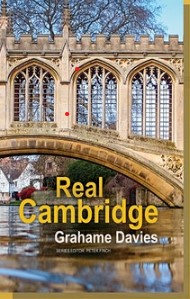
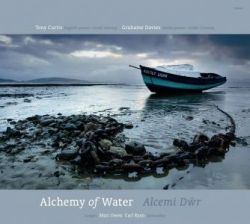
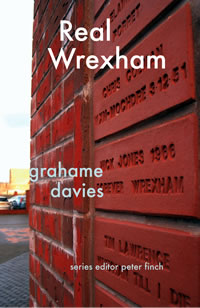
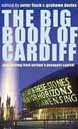
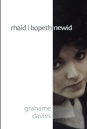
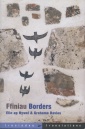
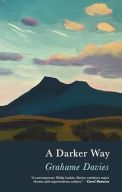
 No
país de la
No
país de la 