|
|
Llyfrau/Adolygu: |
 |
Llyfrau ac Adolygiadau
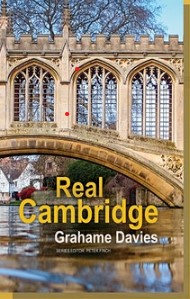
Adolygiadau Real
Cambridge
"Setting to work in one of the most over-interpreted cities on earth,
Grahame Davies pitches for the margins, subtle undercurrents and
overwritten terrains of Cambridge. This light-touch genial
pyschogeographer seeks the company of a series of Virgilian guides to its
habits and haunts, and the consequences are revelatory. For such reasons
this warm and personal book stands a league apart from the scores of
gushing screeds on the branded city and its ossified centre." "This is the most beautifully written and wonderfully curated exploration of Cambridge, its stories, history and its people. Funny and informative in turn, it's a great read even if you never want to leave your armchair. This is an insider's view of an incredible city, a people watcher's dream. I can't recommend it enough." Rick Guest, Amazon "If you’re not in a fiction frame of mind, this behind-the-scenes history of our fair Fenland city is packed with diverting information. Accompanied by fascinating characters, both living and dead, writer Grahame Davies takes the reader on a virtual tour of the town, from the hallowed halls of the University Colleges out to Arbury, East Road and beyond." Alice Ryan, cylchgrawn Velvet "What a delightful tour of Cambridge past and present this book is! It brings the city to life, evoking its wonders and eccentricities with charm and wit. Davies serves as a generous-hearted tour guide, showing through his vignettes and observations that Cambridge is as much her people (past and present) as her splendid buildings. "In the process, he draws on a dizzying array of thinkers, artists, musicians, and even pop icons to bring Cambridge to life. He does all this in a style that's both elegant and easy to read. The effect is to provide the reader with a world every bit as strange, wonderful, and brilliant as anything imagined in a fantasy...but all the better for being real." Mark Clavier, Amazon.
Alcemi
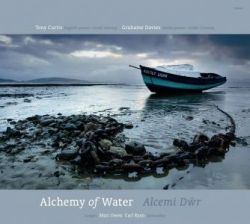
Dwr /The Alchemy of Water "This
collaborative collection of beautiful photos and poems focuses on Wales
and its endless connection to water in all its many forms. The stunning
photography throughout the book comes from Carl Ryan and Mari Owen who
have captured some of the most beautiful areas of Wales as it comes into
contact with water. The images are matched by some short haiku-style poems
from Grahame Davies and Tony Curtis which adds narrative depth to create
an altogether a pleasant and enjoyable coffee-table book." "In her famous critical study, On Photography (1977), Susan Sontag explores the nature and implications of photography as an art form. Among her simplest and most profound observations in this work is the idea that: To take a photograph is to participate in another person’s (or thing’s) mortality, vulnerability, mutability. Precisely by slicing out this moment and freezing it, all photographs testify to time’s relentless melt. "It is interesting that Sontag understands and deconstructs photography here through the imagery of water: in terms of ‘freezing’ and ‘melting’. It is as if the protean character of water captures precisely the very ‘mutability’ in which, Sontag suggests, the photograph inevitably participates. "Gomer’s collaborative book-project, Alchemy of Water | Alcemi Dwr, explores the dialogue between water and photography further in a stunning series of images that reflect the ubiquity and fluidity of this element in the Welsh landscape. "The photographs, by Mari Owen and Carl Ryan, encompass a wide range of subjects and geographical locations: from the glassy surface of Llyn Gwynant in Snowdonia, to a rapid, swollen river in the Vale of Neath; icicles glittering on the branches of a petrified tree in the Brecon Beacons, to grey and coral clouds amassing over Trawsfynydd Nuclear Power Station in Gwynedd; a boat stranded at low tide on the sand at Mumbles, Swansea, to shelves of smooth wet slate catching the light at Cwmorthin quarry, Blaenau Ffestiniog. "Each image testifies to the transformative, capricious character of water and to its vital, ‘alchemical’ presence and influence within the natural, social and historical topographies of Wales. According to Sontag, photography’s ‘participation in another person’s (or thing’s) mortality, vulnerability, mutability’ makes it an essentially ‘elegiac art’. And, certainly, a number of the photographs in Alchemy of Water | Alcemi Dwr, such as the images of Trawsfynydd Nuclear Power Station and of rain clouds above a ruined slate mill in Porthmadog, are, in Sontag’s words, ‘touched with pathos’. Just as, in Sontag’s analysis, photography is absorbed into the creative and critical discourse of poetry – of the elegy – moreover, Alchemy of Water | Alcemi Dwr represents an artistic space where the boundaries between photography and poetry are permeable. "Accompanying and responding independently to each photograph in the book are short, distinct poems in both English and Welsh by Tony Curtis and Grahame Davies, respectively. Each combination of verse and photograph constitutes a site of overlapping – of alchemically interacting – ‘images’, in Ezra Pound’s sense of the word. ‘An “Image”’, Pound argued in Imagisme, ‘presents an intellectual and emotional complex in an instance of time’. Although Pound was referring explicitly to the poetic image here, his analysis seems equally applicable to the kind of skilled and ‘intellectually’ and aesthetically considered photography exhibited in Alchemy of Water | Alcemi Dwr. Indeed, in his introduction (Davies also provides an introduction in Welsh), Curtis identifies the ‘imagist poem’ as a ‘reference point’ for the poetry in the book, along with the traditional Welsh-language poetic form, the englyn; folk verse [and] haiku’. "In response to a photograph of mountains mirrored in the still water of Llyn Dinas, Berddgelert, Snowdonia, at dawn, for example, Curtis writes: As morning’s mist lifts and flies, water and light contrive to double the world. An image of slate in Cwmorthin quarry, on the other hand, prompts the following response: In the land of slate-blue, slate-black, slate-brown, slate-green, these hands of low cloud bearing a platter of light. Grahame Davies’s Welsh-language poem accompanying the Cwmorthin quarry image demonstrates the added alchemy of language – the creative exchange between Welsh-language culture and English-language culture – that bubbles up like a spring in this porous artistic space. "I
have only a partial knowledge of Welsh; and yet in hearing and translating
(albeit perhaps, at times, crudely) this and Davies’s other Welsh-language
poems, I sensed that I myself was participating, in a unique way, in the
overall (to cite the book’s definition of ‘alchemy’) ‘magical process
of transformation, creation or combination’: Yng ngwlad y llechen las
a’r llechen frown, ar lethrau’r llechen werdd, a’r llechen ddu, ar ddirwnod
pan f’or awyr lwyd yn drwm, mae’r glaw yn addo’i arian byw i mi. Alchemy
of Water | Alcemi Dwr, then, is an engaging, often beautiful, and innovative
exploration of the relationships between water and landscape and word
and image. It is also a celebration of Wales and Welsh culture and of
the creativity that they inspire. And while I personally felt the relative
lack of ‘images’ of South-East Wales in the book, I am heartened by Curtis’s
observation that THERE IS NO CORNER WATER CANNOT TURN NO DARKNESS WATER
CANNOT LIGHTEN. "Pe byddai’n rhaid imi ddewis ar amrantiad fy hoff linellau i am ddwr, rwy’n meddwl mai ‘Hon ydyw’r afon, ond nid hwn yw’r dwr’ yn ‘Ymson Ynghylch Amser’ gan R. Williams Parry fyddwn i’n eu dewis. Dywed gymaint. "Mae Grahame Davies yn cyffwrdd â’r un syniad yn ei ragymadrodd i’r briodas ddwyieithog o luniau a cherddi yn Alchemy of Water – Alcemi Dwr, wrth egluro sut y llwyddodd y ddau dynnwr lluniau y bu ef a Tony Curtis yn cydweithio â hwy i 'rewi' elfennau ar gyfer y gyfrol. Yn wir, mae Grahame Davies yn edmygus iawn o lwyddiant y ffotograffwyr, Mari Owen a Carl Ryan, i rewi â'u camerâu lif nentydd, symudiad cymylau a threigl amser ar gyfer y gyfrol. Mae pedwar artist yn rhan o gemeg Alchemy of Water – Alcemi Dwr. Owen a Ryan wedi tynnu’r lluniau a Davies a Tony Curtis wedi llunio penillion byrion yn ymateb iddynt – y naill yn y Gymraeg a’r llall yn Saesneg. "Cyfrol ddwyieithog, ie, ac mae’n deg dweud hefyd mai’r darllenydd dwyieithog sy’n mynd i elwa fwyaf ohoni gan nad trosi cerddi ei gilydd mae’r ddau fardd ac mae ganddynt, ill dau, eu rhagymadrodd personol eu hunain. Er, gyda’r cerddi, mae’n rhyfeddol weithiau sut y sbardunodd ambell lun y ddau fardd i ddilyn yr un llinell meddwl yn union. Dro arall mae cryn amrywiaeth a dim ond y darllenydd dwyieithog sydd wedi ei fendithio i werthfawrogi hynny. "Cynnwys y gyfrol ddeugain o leoliadau a cherddi a’r lleoliadau hynny, am ryw reswm, wedi eu rhestru yng nghefn y gyfrol yn hytrach nag yn hwylus ochr yn ochr â’r lluniau. Go brin bod angen dweud bod y lluniau o safon aruchel o ran cyfansoddiad, goleuo a dychymyg gan wneud y gyfrol yn ychwanegiad teilwng i nifer, erbyn hyn, o lyfrau lluniau trawiadol a gyhoeddwyd ar gyfer byrddau coffi’r genedl gan Wasg Gomer dros y blynyddoedd diwethaf. Mae ychwanegu penillion y ddeufardd atynt yn amheuthun, a’r ffaith i’r ddau gyfyngu eu hunain i lai na hanner dwsin o linellau yn gweddu i’r dim. "Mae’r pwyslais ar olygyfeydd a sonia’r ddau fardd yn eu rhagymadrodd am harddwch a phrydferthwch Cymru. Golyga hynny, er mai dwr yw’r thema, nad dwr sydd wedi mileinio a throi’n fwystfil gan raeadru drwy barlyrau a cheginau a chartrefi mewn rhyferthwy o fraw yw dwr y gyfrol hon ond rhywbeth llawer mwy rhamantaidd. Tybed a fyddai cynnwys yr elfen ffyrnig honno wedi ychwanegu at wefr y gyfrol ynteu amharu ar ei naws? Mae rhywun yn sylwi hefyd mai lluniau heb bobl yw rhai’r gyfrol – ond wedi dweud hynny mae ôl llaw dyn yn rhai o’r golygfeydd ar ffurf cromlech, pont, olion abaty, `ceyrydd concrit’ atomfa Trawsfynydd, ffensys a dwy fynwent - a dymuniad Grahame Davies; Rho imi
orwedd am byth fel hyn, Oes, mae ffrwyth yma i’r llygad ac i’r deall. Glyn Evans, adolygiad ar www.gwales.com trwy ganiatâd Cyngor Llyfrau Cymru. .
"Photos from forty locations are included in this bilingual publication accompanied by short, enigmatic, verses in English by Tony Curtis and in Welsh by Grahame Davies. The bilingual reader is twice blessed because the Welsh and English verses are not mirror images – although it is interesting how both poets have grabbed the same flight of fancy on some occasions when reacting to the photos. As Curtis has it, ‘Grahame and I decided that we would respond to the landscape rather than to each other’s writing. "Of course, some poems are close in theme, mood and implied narrative as they draw on the specific moments captured by the camera. At other times we went on quite individual journeys from the same starting place.’ He could have said ‘same staring place’ because these photos invite contemplation. Anyhow, the bilingual reader has the added bonus of watching both fancies in flight. "Both poets have also contributed their own personal introduction to the book. In his, Grahame Davies grapples with the transformative nature of alchemy, be it changing base metal into gold or knowledge into wisdom and mortality into immortality, enabling the common elements of human life to become mystical. Within the common theme we have water in various guises, sometimes beautiful, sometimes reflective, sometimes moody, even overflowing. Sometimes as threatening clouds and other times as silver shafts ripping the land. "Photographers and poets have avoided scenes of the occassional deluge that sometimes flows through communities sweeping before it homes, lives and aspirations. Maybe this was not considered suitable for what is essentially a coffee table publication more in tune with Thomas Hood’s 'gentle streamlet' than those television images of flooded homes and communities. But what are included are some really arresting photos offlowing brooks, heavy rain clouds, the countryside reflected in the mirror of a lake as the camera halts, as Davies has it, not only the motion of clouds but time itself. Much as Hood had said, ‘The water that was here is gone, But those green shadows do not change.’ "One thing that I did find a little strange in a book that promises to celebrate the landscape ‘and the people’ of Wales is the complete absence of human presence. Discounting the photographer, there are no people in these scenes although, it must be said, that the works of man are evidenced in a number of them in the form of a cromlech, a bridge, a castle, a stranded boat, Trawsfynydd’s ‘blockhouse headstones’, and a graveyard alongside which ‘the river runs brimful of life’. So, yes, there is much to admire in the photos and much to contemplate in the verses." Glyn Evans, review on www.gwales.com with the permission of the Welsh Books Council.
"Check
here for the meeting of form with freedom, for tradition and for avant
garde and for examples of the kind of splendid literary shenanigans that
only real poets can succeed at in a verse which melds two cultures into
an exciting whole." "Because
Grahame Davies forever makes the perfect imperfect sense, the smallest
things exploding into God or Language or the Sea Itself. That’s the surprise
of the poem, the ease of a great writer: that you don’t notice the lightning
as it emerges from the depths, but what it illuminates. No need to answer.
Read the poems. Grahame Davies is a known treasure in Welsh, and now we
English-speakers get to share the wealth.” This week's poem, Departed, is by the Welsh, Wrexham-born, poet
Grahame Davies, and comes from his first collection in English, Lightning
Beneath the Sea, just published by Seren Books. At
first sight the poem might appear to be saying something ordinarily
elegiac in an ordinary way. Davies
is a poet of many skills and shapes: the collection mixes free and
tightly formal verse, and only a few poems take the regular quatrain
pattern. So it's not the default stanza-form for Davies that it can become
for some poets. At the same time, its use here reminds the reader of other
elegiac poems – Gray's Elegy, perhaps, also in iambic pentameter and
rhymed ABAB.
The diction is plain, like that of good prose, the deft verse-carpentry
utterly unobtrusive. But
appearances are deceptive, and this poem sets out on a new tack from the
start. Read beyond the title, and you realise the speaker is not about to
deliver pieties or pleasantries concerning the dear Departed. Far from it.
Instead, he wants to explain how real and divisive the departures are, and
he's being quite assertive about these views, not cloaking them with
imagery. It's refreshing to meet a new poem of ideas. Its images are
effective, but, until the last line, illustrative rather than
load-bearing. "They touch our lives much less than we suppose/ the dead" struck
me as one of those moments in poetry when a half-thought from the back of
your mind (pushed there because it's uncomfortable, perhaps) is brought
into the light. You think: yes, of course. I always knew that! But the
truth is you didn't – not quite. This is a young
man's poem. Davies himself is in early middle age, and the vision springs
from the thick of vigorous life. It's not immature, not heartless. It
finds its way to sorrow, and perhaps that's where it began. But it's very
much about living – all the necessary trivia, all the essential moving on. Rilke wrote, with
terrifying youthful insight, that everyone has to find his or her own
death. That thought comes to mind in the descriptions of the departed
through their various claims on the living. The climax of the list, at the
end of the second stanza, shows us the lack of moral transformation in the
survivors – "we" who've witnessed courage and suffering. With wry, sad
humour, the speaker reminds us how we break our pact with the dead "almost
the next day". The
theme is pursued in the third stanza. With
"the great ones" the poet leads us to look up. Their "spirits wrote in
stars across the sky", but, even if those stars are not erased, they are
remote. "They count for little, or the truths they taught." There's a
sense of disillusion. The trust that death brings transformation is innate
in the major religions. It's what Easter for Christians is all about. A
legacy of revelation is expected of great religious leaders, and sometimes
of ordinary significant people, too. The reluctance to have the door
slammed and the story finished is a powerful human instinct. There would
be no history, literature or learning without it.
There's further startling insight in the fourth stanza, which looks back
to the earth to "the least beloved human face". Again, not the face we
expect in a conventional elegy. The living count more than the dead. More
than that – the least loved is worth more than the most loved, if the
former is alive and the latter dead. The
poem turns at this point. It has seemed an anti-hymn, despite its stately
iambic rhythms. Now it seems to shift into a mode more emotionally
celebratory, more truly hymn-like. The trivial things "that bury sadness"
also "sing" – they project a living line beyond it. The song (perhaps it's
"the music of what happens") is all-important, although, the poem admits,
the singing itself is tragic, "in a way". It's almost an aside, this
small, qualified point, but it's essential to the perspective. The drive
of "creation" to survive is closely connected with death. Its songs are
finite, its hunger to sing them full of pathos. The
images in the last stanza are simple and striking. Creation sighs and
sings, and in a further personification, "the daily sunlight" stares (the
sun shining alike on the just and the unjust). The suggestion that the
portrait is fading faster than "the painted frame" continues those earlier
revaluations concerning loved faces. The
sun and the wind also frame the human image and emphasise its frailty. And
yet, finally, the significance of "the loved-one's lonely, lichen-covered
name" is inescapable. "Lonely" implies other words, names, gravestones,
which have vanished: this name itself is hidden by a more time-rich
life-form – lichen. The melody of the line intensifies with the angle of
vision. There's gentle alliteration elsewhere ("patience"/ "pain",
"spirits"/ "stars"/ "sky", "truths they taught", "sighs"/ "sings"). With
the last line's heavier alliteration, the voice rises to a lament, but
keeps its homely register: "loved one", "lonely", "lichen-covered" are
hardly recondite terms.
Davies is perhaps a religious poet, but he
evades "organised" religion. His speakers quietly wait and watch, keeping
a "less-deceived" eye on what is, and letting the observations move as
they will to epiphany or moral insight.
It may be far-fetched to think a primarily Welsh writer could be
influenced by Philip Larkin, but Larkin is the poet he most reminds me of:
a writer not afraid of the big themes, but not pretentious about them, and
not afraid of the ordinary, but alert to the measure of its significance." "As
is clear from the quotes above, Davies has a real flair for coining sharp,
pithy phrases that get to the nub of the matter. He is a thoughtful, meditative,
serious poet and well worth reading. What I think he most needs to be
is less tidy. Peter Finch's description of these poems as "the meeting
of form with freedom" is only sometimes true. Sometimes the prevalence,
not to mention the regularity, of Davies's favoured iambic pentameter
becomes oppressive. This is especially so in his villanelles, the tidiest
form in the world and potentially the deadest – the end is, after all,
predetermined from the first three lines on. I must admit villanelles
seldom work for me unless the poet subverts them somehow – "Song for Samhain"
does it to some extent by varying the line length, but mostly his use
of this form is nothing if not conventional. He is really skilled with
form, but I would like to see him use it more as Paul Muldoon and Paul
Henry do, with their disguised sestinas and variant rondeaux that you
only notice on a second or third reading. This is a good, interesting
collection, but I think there will be a better yet to come from this poet,
one which manages not to look as if it's trying quite so hard.When it
does work, his formal command and pithy pay-off lines can be superb." "Grahame Davies is famous for his poetry in Welsh and his knowledgeable and sensitive appreciation of poetry in other tongues. "Here he proves that he is as creative and skilful in English. He shows throughout a mastery of form from casually natural iambics to sonnets and several fine villanelles. He even recalls a traditional Welsh form in the triads of ‘O Beata Trinitas’, a beautifully turned piece written to be set to music by Karl Jenkins. Several of the poems are connected with other arts, either as lyrics or in association with fine art. Clearly Davies loves books and thinks a lot about the relationship between them and their readers. No less than six poems are connected with finding books or watching people reading them. ‘The Final Page’ (one of his graceful villanelles) concludes ‘But, smiling to herself, she’s unaware,/ held by the power of that unknown pen./ She closed her book with tenderness and care; / She stroked the pages like a lover’s hair.’ A similar lyrical tenderness is found in ‘Propempticon’ (wishing well to a journeying friend). "Other poems are more narrative – ‘Crossroads’, the conversational ‘Sweet Peas’ or the mysterious ‘Quarry’. His poems are immediately accessible but never shallow. He can be warmly humorous as in ‘Remembrance of Things Past’ and ‘Compatriot’ – where his childhood memories of Llangollen lead to deeper feelings about ‘this one-week vision of a world made right’. Only the ‘found’ poems did not really work for me. He is so good at the subtle play of structure, sense and sound that their relative crudity was disappointing. "Several
of the later poems are concerned with our relationship with the dead and
in ‘Departed’ he confronts with gentle honesty the rarely spoken truth
that ‘the least beloved human face is more to us than those no longer
here’; that the ‘trivial’ demands and delights of living carry us away
from lost loved ones. This, the inspiring ‘Prayer for the Dying’ and the
beautifully crafted ‘Beltane Blackbird’ are outstanding in a collection
of high quality. Its wide appeal should make Grahame Davies as celebrated
by readers of English as he is in Welsh. He is indeed a writer who keeps
‘the world moving / slowly closer to the light’." "Grahame Davies is not your introspective Welshman. Despite contributing to Seren’s excellent ‘Real’ series he also recently published a book on Wales and Islam, ‘The Dragon and the Crescent’ (Seren, 2011). Being Welsh seems to be defined not by creating a siege mentality of ‘us v them’ but through a confident celebration of identity that belongs beyond the nation’s edges. "I’m not sure if that’s why so many poems at the start of the collection are set on the shoreline, but it’s fitting. ‘Cromer Pier’ with its observations of ‘waiters’, ‘runners’, ‘fishers, ‘walkers’, ‘the old’ and ‘the young, whose only scale is sea and sand’ also ends with the expanse of the ‘horizon’. And this is what follows: the minutiae and the expansive. The minutiae is often made up of individuals’ lives and relationships, often of the life of the poet himself. Whether it be rhyming ‘Proust’ and ‘Llanrwst’ in ‘Remembrance of Things Past’ or ‘Revisiting’ the college in which he studied, there is a tenderness in his consideration of people and places. "In a number of poems on books and reading, Davies, like R.Williams Parry before him, is as interested in the inscriptions written inside the volumes he finds in second-hands shops as he is in the books themselves. He senses and observes the richness in the detail. In ‘Capital Bookshop, Cardiff’, he picks up a volume inscribed “Dear John, bought this night he left Cathays” and considers that this is , ’A long-dead love; no record of it stays/except, on this old bookstall’s bargain stand’. The stress on ‘except’ suggests that it does survive and that the past can never entirely be escaped. And there it is again, the minutiae of the inscription and the expansiveness of the past and of the way people and relationships survive. The latter poem is also in the form of a villanelle and the collection has a number of them. The poet clearly enjoys the form but at times these strain a little and, personally, I found his more conversational poems to be more successful. The girl that ‘stroked the pages like a lover’s hair’ in ‘Final Page’, another villannelle, was too sentimental for me. Indeed, it’s an uneven collection with poems such as ‘Crossroads’ and ‘Hoodie’ seemingly out of place with many of the other poems. Perhaps this is because Davies adopts a persona for these (I presume) and moves away from the personal, observational qualities of many of the other poems. However, there is more than enough to satisfy the reader and it is an uplifting collection, full of hope. "As
one brought up on that peculiar Welsh tradition of the Gymanfa Ganu, I
loved ‘The Complete Index of Welsh Emotions’ which humorously sums up
much of the Welsh character. Even in a poem as dark as ‘The Departed’,
‘It’s not the tragic, but the trivial things that bury sadness deeper
every day; not how creation sighs, but how it sings, though that itself
is tragic, in a way.’ there is beauty, ’The loved one’s lonely, lichen-covered
name.’ The sound of that final line itself implies, despite the loneliness,
that the poet’s realisation of these truths is tenderly felt. Just as
those poems set on the shoreline are a fitting opening, ‘Doorway’ is a
fitting ending to ‘Lightning Beneath the Sea’. The ‘unmarked doorway’,
the minutiae, leads to an expansive ‘Palace of Joy’ and the character
who leads the poet on calls him, despite the fact that he ‘would have
stayed and watched’, to move on as “there’s plenty more to see.” There’s
joy to be had in this life, often in the trivial detail, and Davies celebrates
it. And he made me, in his best poems, feel it too and made me want to
see more of it in the everyday. I look forward to seeing what else he
sees." "In Grahame Davies’ collection, Lightning Beneath The Sea, the final poem, “Doorway”, ends with the line, “Come on”, you said, “There’s plenty more to see.” "The same can be said for Davies’ poems. Curious, reflective and often introspective, his poems introduce the different people we may encounter in a lifetime as well as some of the strangers we never meet. He invites us to observe the seemingly commonplace or mundane in different locations: a charity shop, the seaside, inside a stranger’s home. The routine becomes a tool to explore the intricacies of human relationships and a wider society. "Always observant, the poems are highly visual, and often allude to a back-story to which the reader is not privy. Davies invites us to look closely at our fellow human beings, suggesting that first impressions are not always correct, and that there is much more beneath the surface. In “Plas Power”, Davies creates a striking image of a stately home, where “the stairs curve round like strands of DNA”: grey gables, towers, wrought iron tracery, like something Poe or de la Mare would build words were wealth and poems property. The poem alludes to a history between two characters, “she took my hands just like when we were young”, yet Davies does not reveal this shared past. Instead, we are left to observe and speculate. "One of Davies’ strengths is his ability to evoke a particular mood or thought which persists long after the poem is read. His poems, filled with idiomatic speech, are engaging and poignant. This is where Davies’ seemingly ordinary or banal subjects thrive: in the juxtaposition between these and the ‘real’ emotional intricacies within humans. This is executed perfectly in “Charity Shop”. The poem begins rather mundanely, observing the typical books which are found there, “the glossy, tasteless, coffee-table kind”: it then opens into a story about a family and their missing daughter: And yet,
perhaps there’s more here than there seems "Davies stirs our emotions with his contrast of the ordinary and the heartbreaking, along with his use of everyday speech: Her parents’
names, her sister’s, and the date "The final lines of this poem, with their re-assuringingly conclusive rhythm, rhyme and repetition cement the power of Davies’ ability to infuse the banal with the poignant: I buy
the unread, two-pound-fifty tome "There are certain lines in Davies’ poems which are truly thought provoking. In “Reader”, for example, which depicts an unknown woman in her home as she reads, Davies probes human nature and relationships: Better,
of course, that we should never meet. "Davies is at his best reflecting on others, encouraging his readers in turn to examine themselves and their judgements. “Crossroads” concerns meeting an old friend’s daughter and discovering that she is a prostitute. The shock factor works, not least because of the banal tone and language which lure the reader into a false trust, only for that trust to be broken. "The
beauty of Davies’ poems is their ability to highlight the hidden aspects
of people that are often viewed negatively, whilst maintaining a completely
unbiased and non-judgemental tone. Unfortunately, the significant variations
in tone, subject matter and emotional depth across the collection also
allow for some poems to be forgotten. Nevertheless, Lightning Beneath
The Sea contains such a wide range of poems that there is definitely
something here for everyone. "Grahame Davies is the author of fifteen books and an important figure in Welsh-language poetry. Duncan Bush is similarly established; a novelist and dramatist, The Flying Trapeze, marks his sixth poetry collection. Such positions could easily provide opportunities to rest on one's poetic laurels, to take a back seat, to shirk risk. Not so in both these intelligent and witty collections. "Lightning Beneath the Sea is Davies' first book of poems in English. The title suggets surprise illuminations and things in unexpected places, both of which feature. Several sea poems open the collection, depicting the sea as a lif force which both gives meaning to existence and resists the individual: And isn't that the reason that we come, when reason fails? to face an element we cannot live in, and to feel alive? 'Shoreline, New England' 'Such existential questioning soon gives way to describing an unexpected encounter. The speaker finds a man dressed in women's clothes whose car is stuck in the sand. Though the speaker is unable to tow the stranded car, the conversation and the man's contentment offer the comfort lacking from the sea: 'I couldn't help him. But he did help me.' 'From here we move inland, to a second series of poems which reimagines the same subject: books and the continuing theme of epiphany and transformation. Initially these themes combine in a literal sense, with 'Discovery' showing how a second hand bookshop offers a find 'heavy with answers'. Subsequent poems are themselves transformations of this poem, moving on to explore the distanced love of book inscriptions anr hte voyeurism of watching others read. Found books offer found moments, and, of course, found poems, of which there are a number in the collection, including the wonderful 'Errata'. This poems appears to be an unadulterated list of corrections to My Life and Loves (1925) by Frank Harris, containing such intriguing instructions as 'p279 Delete comma after 'maiden'' and 'p358 'Bushed' should be 'hushed.' The inclusion of found material, presenting fragments and lists from everyday life as poetry, is in contrast to the many formal poems in Lightning. There are several sonnets and poems in rhyming quatrains; whilst heavy use of regular rhyme and metre can sometimes seem old-fashioned, it's a mark of skill to be able to use these forms successfully to give sprightly lines and to shape tenderness in the way that Davies does. Some subjects seem to demand a more formalised mode, such as that of the refreshingly unsentimental 'Departed': We don't
admit it, even when it's clear, 'Davies
is clearly keen on the villanelle - there are six here - and the expectation
of this traditional form, the certainty generated by its repetition, gives
a counterweight to the epiphanies at the heart of other poems. Indeed,
throughout this collection there seems to be an energising tension between
surprise and fatalism.'
"Grahame
Davies has already written a ground-breaking study of Welsh contact with
Judaism. Now he turns to our relationship with Islam for over a millennium.
It is an excellently researched, academic and objective contribution to
the history of Wales . . . Grahame Davies' book is a treasury of knowledge
about its subject . . . a priceless tome." "This
is a fully annotated work of scholarship as well as an always readable,
sometimes exciting book that opens out a previously neglected aspect of
Welsh – and British – culture over more than 400 pages. It
exposes how, in one aspect at least, the Welsh have much more in common
with the English than we might care to acknowledge. Davies says he found
the same hostility, prejudice, ignorance, sympathy, romanticism, admiration
and human failings in our contact with one of the world’s greatest faiths.
In
a society with a popular press that not so long ago showed the depth of
popular ignorance by asking what Islam ever did “for us”, this amounts
to an important book." "The author of this fascinating volume, an honorary research fellow at Cardiff University, is a well-known poet, novelist and literary critic in both Welsh and English. As is clear from the detailed and genuinely helpful footnotes and bibliography, the book is the result of seven long years of intensive research and reading. The theme is the long and involved inter-relationship between the Welsh and Islam: the twin issues of the considerable Muslim influence on Wales and the influence of the Welsh on Muslim lands. "The study is a sequel to the author’s well received previous work, The Chosen People, published in 2002, an enthralling account of the relationship between the Welsh and the Jews. For that title the author unearthed eighty-five relevant items. For the present book the total topped 200 and surprised the author. They range from the age of the Crusades in the high Middle Ages right through to the present, from sources written on parchment to those despatched as e-mails. Sources include diaries, journals, plays, travelogues, novels, short stories and poems – in both Welsh and English. Generous quotations are printed from many of these sources. " Poets
from the mediaeval period and the age of the nobility like Iolo Goch feature
here, as do keynote Welsh writers like Charles Edwards, William Williams
Pantycelyn and Ellis Wynne. The authors cited range from Gerald of Wales
to T. Gwynn Jones, from T. E. Lawrence to Cynan, from Gwenallt to Alun
Lewis. The author’s mastery of all this disparate material is highly impressive.
"Prime Minister David Lloyd George, who features prominently in the book, was very strongly opposed to the Turk after the First World War. There were a few rare exceptions, such as the eighteenth-century Orientalist and linguist William Jones, and a few more enlightened travellers and sailors who were favourably disposed to Islam, its prophets and its followers. "The
new, much more enlightened attitude of recent decades has spawned a homespun
Welsh Muslim literature, and a mature, positive, fruitful relationship
has grown up between the Welsh and the Muslim. The political events of
recent years make this an especially timely and apposite study, well worth
perusing. "The Dragon and the Crescent is an impressive and important new book published by Grahame Davies, already a prolific author on religion in Wales as well as a poet and broadcaster. The book is a gift to those who desire a deeper understanding of the relationship between Islam and Wales. ... "The
story may not always be a positive one, but it ultimately gives us hope.
Despite the conflicts and prejudices of history, the future relationship
of Wales and Islam is yet to be written and lies in the hands of us all. "Davies follows on from his fine anthology, The Chosen People: Wales and the Jews, (2002) by presenting generous quotations of prose and poetry linked by continuously evolving and very readable prose. ... "Grahame Davies' liberal and empathic sensibility seeks to open out imaginative space around his subjects, recognising them (but only as far as he, in humanity, can) as writing according to their lights. ... "Davies
tacks between Scylla and Charybdis on his odyssey through time, pausing
at one textual island after another, seeking that difficult mediation
between truth and courtesy. His sources are a wealth of historiographical
texts, poems, memoirs and novels, from the era of the Crusades to the
present day. A real cornucopia for the reader.' "'The
Dragon and the Crescent' is a study of the relationship between Wales
and Islam told through the examination of the literature of Wales. Spanning
the period from the Crusades to the present day, the author collects and
analyses extracts from a wide variety of writings, told by a variety of
narrators, and ends with a survey of the relatively new genre of works
written by Welsh Muslims. I found this book fascinating. I am sadly unable
to read Welsh so lots of the authors cited were unfamiliar to me, but
I was pleased to be able to read extracts by writers who are not always
avaliable to read in English. I was a little surprised by how few of the
writers cited I had actually read (Gerald of Wales, Idris Davies, Stevie
Davies, Sharon Penman and the Brut y Tywysogion). This was a great idea
for book, and it is both well written and fascinating. I would recommend
this for anyone interested in religious or cultural history."
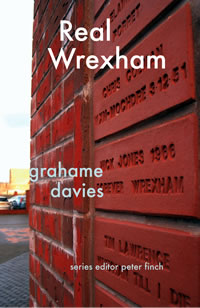
"If you thought you knew Wrexham, this book will make you think again. A proud boast on the back of a new book and one which didn't fail to deliver as I read from cover to cover the fascinating Real Wrexham whilst stuck on a go-slow train running late to Cardiff yesterday. "Poet,
author and colleague Grahame Davies really gets under the skin of this
place we call home combining his knowledge as a local boy, his skill as
a journalist to separate fact from fiction, and taking a tour of the district
with people who know the area best - the locals." "What I most enjoy about the franchise - apart from the detective-like uncovering of obscure local facts - is the notion that such workaday spots as Wrexham, Newport etc are as worthy of investigation as say, Venice. And why the hell not? How often in travel literature do we have to put up with some white-suited snob purple-prosing their way around some famous historical ruin or other? "...Real Wrexham - that Welsh Cinderella of a town. Streets and suburbs are tramped; buildings explored; the dead conjured back into life. There's Wrexham lager and Elihu Yale; a werewolf and St Giles' Church; Richard Nixon and CS Lewis; Hightown "skyscrapers" and the Blue Lagoon. "But ultimately it is not the constant revelation of interesting factual tidbits that makes this book so enjoyable. Rather it is Davies' subjective engagement with the town. That unique personal response to place that we each experience - there are, after all, as many real Wrexhams out there as there are inhabitants of the town. "Fortunately
for us local-boy Davies is able to articulate his version of Wrexham with
all the honesty and enthusiasm of the discerning insider. And this is
what makes reading Real Wrexham - and the Real series in general - so
much more satisfying than flicking through some dry and dispassionate
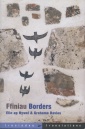
guidebook." "Wrexham is another border town - this time in Wales - and Grahame Davies takes up this theme in his introduction to his book about the town called REAL WREXHAM:
"Sometimes
I read something and it seems to be so 'right' it is beautiful - and that
is how this short passage seems to me. It is something that often struck
me living where I do how exactly does one country (England) turn into
another (Wales) - and this describes it exactly. Grahame Davies is an
accomplished poet, journalist and critic and is also fascinated by his
home town - and it shows. This book; which seems to be part history, part
travelogue and part memoir, seems to be the ideal merging of his talents." "It
has been claimed that if Dublin happened to be eliminated by war or natural
disaster it would be possible to reconstruct the city through a careful
reading of James Joyce's Ulyssees. In similar circumstances Grahame Davies's
fascinating book would probably assist in the reconstruction of Wrexham." "This is a well-informed survey of the delights of a town known intimately by its author. I am sorry to say I have been to Wrexham only on one occasion: this is my loss, if the loving portrait drawn here is anything to go by. But there, Grahame Davies has a lively mind and a fine turn of phrase, which he puts to good purpose here." Meic Stephens, Cambria, Chwefror-Mawrth 2008, 51. "Mae'n llyfr darllenadwy dros ben, yn llawn o wybodaeth ddiddorol. Gyda'r blynyddoedd, 'rwyf wedi rhoi benthyg ambell lyfr i ddarllenwyr Cymraeg a Chymreig ond chewch chi ddim benthyg hwn! Rhaid i chwi ei brynu eich hunain, ac am £9.99 mae'n werth y pris." A.D. 'Wrecsam yn Wir!' adolygiad yn Y Clawdd, Chwefror 2008, 14. "Real Wrexham" is an unexpected gem of a book by Coedpoeth writer Grahame Davies ... In under 200 pages he teases out the unique character and heritage that make up our town - 'a place where landscapes, economies and cultures converge. A place of encounter and transition. A place where one and one makes three.' It's very much a personal history of Wrexham, the town and its environs, with enough quirky facts, myth busting and anecdotes to keep the pages turning." Real Wrexham by Grahame Davies ' Blog Plaid Wrecsam. 27/12/08 It is real, too, because Grahame Davies is an insider and every sentence is infused with personal, subjective experience. He is a poet, and his use of language is witty and unpredictable. The former malthouses of Island Green Brewery he describes as "like an upturned brassière in scalloped slate". His description of Minera Mountain, one suspects, would not be displayed in the tourist information centre: "common- land grazing for sheep, a foot- path for walkers, a scenic drive for tourists, a place to pick whinberries, a vantage point for radio hams, and a place to dump and torch stolen cars".' Nick Roe, About Wales, Ebrill 2008, p26.
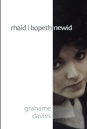
"I have just finished reading a novel which has changed my life. Many books do this , of course, but not in the revelatory way that can only happen on rare occasions. Afterwards, everything has changed. 'Catch 22' did this for me, as did Kesey's 'One Flew Over The Cuckoo's Nest' and, most certainly, '1984' and 'The Handmaid's Tale'. "But this book is one from and about Wales , though with an important European dimension. It is called 'Everything Must Change' , published by Seren and written by Grahame Davies... "The novel was longlisted for the Wales Book of the Year in its original Welsh-language form in 2005. As far as I know, the English version has received no prizes. For this novel, Davies deserves international acclaim. It is simply the best novel I have ever read from our nation. ... "I have to admit I cried at the end of the novel and fiction rarely has this kind of impact ; songs regularly do though. Not since the stories of Bernard MacLaverty have I been so moved. I didn't want to leave Meinwen and Simone behind, but knew I must. The novel made me re-think my perceptions of Wales and Europe, of political struggles but , above all, it brought to life the ideas and conflicts of its two protagonists so vividly. "I followed
closely their journeys and their changes. How Simone's unique view of
the world was fashioned by her times , but also stood outside those times
and how Meinwen underwent such a radical development through painful experiences.
In a way, Weil represents the complexity of Europe itself and Meinwen
that of a modern Wales, yet both are so much more than mere ciphers for
Davies's theories; indeed his own political agenda is never uppermost.
I could go on, but the best thing I can do is recommend this book. It's
a grave injustice that it still exists on the periphery; if the battles
of our people had been fought with bombs and guns then probably the London
literati would pay more attention!" "Grahame
Davies's astonishingly poised novel comparing and contrasting Weil's ambition
with that of a latter-day Welsh language activist, "Everything Must Change.".
Bookers, Pulitzers, and Nobels have been granted for far less. I rarely
praise a novel so, but this I do. "As
a novel of ideas Everything Must Change is a great intellectual
achievement and a fascinating state of the nation novel." "Davies is tackling a difficult subject here. He aligns the fascist rise in inter-war Europe and the life of the Jewish French philosopher Simone Weil with the linguistic, political and cultural machinations of 21st Century Wales. "The
result is a deep and roaring work which tells Wales just how things really
are. A hard read? Actually much easier than it sounds. Its significance
is its origin. Davies is one of the few Welsh writers willing to risk
reputation by crossing the linguistic divide." "Novels
of ideas that engage you with convincing characters, realistic events,
and a touch of sharp satire along with humanist compassion: very rare.
Davies never loses grasp of his complicated narrative juggling as he shows
you with wit and insight the costs of sacrificing your life for an ideal.
This book flows: every sentence fits. Neither preachy nor pat, Davies
brings a vividly rendered eye and a sharp ear to how we delude ourselves
as we compromise youthful ideals so as to survive." "The
lasting impression, refreshingly in literature from Wales (in English
or Welsh) is that the novel forces the reader to look at the country in
a larger European context. In addition, Grahame Davies makes his reader
think,without the novel being overly academic or philosophical.
The experience is of reading a poet's novel. Chapters unravel as tidily
as stanzas. It is a beautiful and assured read" "First published in Welsh as Rhaid i Bopeth Newid, the spark that ignited Grahame Davies's determination to extend as well as translate his novel into English caught fire through a study of the French philosopher Simone Weil who served on the republican side in the Spanish Civil War and who was affected by unexplained mystical experiences. "Weil
died, aged 34, in 1943. Her activities, and those of Meinwen, a Welsh
radical of late 20th Century vintage, cross-cut through this closely-packed
narrative" "The skin of the Welsh language debate is often too thick and politically weighted to permeate, yet Davies offers a porous insight with Everything Must Change." Cylchgrawn Buzz , Awst 2007. "The
present climate of political change in Wales - whatever the outcome may
be when this review reaches print - strikes a particular resonance in
Grahame Davies's first novel in English. "His deep and sympathetic knowledge of Weil and her writing, drawn from his doctoral thesis, is counterpointed by his awareness of the issues that face Wales, and particularly the Welsh language, today. "This book is an extension and translation of his Welsh novel Rhaid i Bopeth Newid, but in no way reads like a translation. It is, indeed, so signifi-candy augmented as to stand as a new novel in its own right. In it, expected enemies may become friends, and former comrades weaken. "The book certainly reflects its title - though early on, with both women standing firmly by their radical beliefs, the 'must' of Everything Must Change seems more an imperative than an affirmative. "His keen observation is not limited to his main characters; he challenges prejudices on both sides of die language issue and draws a series of scathing, yet somehow sympathetic, images of Welsh society - activists, media and religious figures, politicians and city dwellers. He counterbalances these with Simone Weil's search for personal activism and rejection of ideology in an increasingly totalitarian twentieth century Europe, frequently utilising the philosopher's own words. "His writing, which displays a strong visual element, often looks darkly at the ambiguities and conflicts of Welsh identity. The locally owned cafe in the Welsh heartland is unwelcoming and scruffy; the First Minister's incipient readiness to listen and compromise founders in face of Meinwen's hectoring. Her former mentor succeeds only in boring his ragbag of fellow protesters, "capitalism's sulky runaway children", by speaking far too long. "Yet, Grahame Davies also reflects one of his characters' "wary optimism" about Wales's future. "This
is a serious book but not a heavy one; there is wry humour, the narrative
progresses at a good pace, and scenes interleave like filmic episodes.
In short it's well worth reading." "This
provocative book weaves the stories of the Nazi-era French philosopher
Simone Weil with a young Welsh-language activist a half century later.
The difficult task of blending these stories works well as each sheds
light on the other. If you want a read that is philosophical and meaningful,
try this well-researched and searching book."
"Yn
ôl ei arfer, mae Grahame Davies – yn ei drydedd gyfrol o farddoniaeth
– yn llwyddo i daro tant gyda’i gynulleidfa... Mae amrywiaeth y mesuriadau
a dyfnder y dweud a’r cyfuniad o’r cellweirus a’r dwys yn golygu y bydd
Achos yn apelio at ddarllenwyr o bob math. Y mae yma ddweud pendant
am ein sefyllfa ni heddiw fel Cymry cyfoes. Dyma gyfrol gwerth ei chael."
Mari George ar gwales. "Llais ymwybodol
gyhoeddus... yw un Grahame Davies. Mae ei ddychangerddi am fywyd y gymuned
ddosbarth canol Gymraeg ei hiaith yng ngorllewin Caerdydd (y mae ef ei
hun yn rhan ohoni) wedi hen ennill eu plwyf fel ffefrynnau mewn stomp
a darlleniad, yn rhinwedd eu ffraethineb crafog, eu mydrau llyfn a'u chwarae
ar eiriau afieithus o ddigywilydd...o
fewn ei sonedau a'i villanelles (mesur dewr iawn i unrhyw un fentro
yn wyneb 'Do not go gentle...') a rhai o'i gerddi mydr ac odl eraill yn
y gyfrol hon, mae Grahame Davies wedi llwyddo i ffrwyno'r polemig a'r
telynegol ynghyd mewn ieithwedd uniongyrchol, sy'n cadarnhau ei le fel
un o leisiau barddol cyhoeddus croywaf ei genhedlaeth, ac yn cyfiawnhau
ei ymrwymiad i ddilyn y trywydd hwnnw." "Sefyll
yn driw i'w weledigaeth a wna Grahame Davies hefyd yn y gyfrol hon, gan
beryglu ei enw da fel cenedlaetholwr, o bosib. Bu'r croesholi a'r amau
mewn llys a seiat yn filain o onest, gyda'r dychan yn brathu hyd yr asgwrn.
Eto o dan y cyfan mae yna ddyhead a gobaith am weld Cymru lanach a byd
gwell, ac mae cariad at bobl ac at iaith yn mynnu torri trwy dir caled
y geiriau chwerw." "Mae'r
gyfrol ddiweddaraf hon gan Grahame Davies yn werth ei phrynu petai hynny
ddim ond er mwyn darllen y gerdd hir 'Muriau'. Dyma'r bardd ar ei orau:
delweddaeth syml, llais cryf ac adnabyddiaeth fanwl o angen dyn ac argyhoeddiad
pobl. Mae'r bardd yn un sy'n gallu cydymdeimlo â dwyster achos ac
argyhoeddiad ac mae'n ein gosod yng nghanol ysictod a thrasiedi bywydau
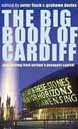
naw o ddynion yn arbennig o dda." The Big Book of Cardiff is an anthology full of lively writing about the city. The almost 60 items include poems, snatches of biography and history as well as extracts from novels. Around a quarter of them have been translated from the original Welsh. . . Among the joys of an anthology like this for an English-speaker is the chance it affords to encounter Welsh-language writers you may have heard of but have had little chance to read. The revelations for me include the beautifully written, poignant extract from Owen Martell's acclaimed novel, Dyn yr Eiliad. The sample of prose from Sonia Edwards's novel, Merch Noeth, is equally impressive. "Among the English language works, I found the extract from Tom Davies's previously unpublished memoirs both very funny and moving. His reminiscences about his days as a steward aboard Cardiff's paddle steamers plying their trade between Cardiff, Penarth and the coast of South West England precisely recreate the atmosphere of decaying pretension and gentility those who travelled on the boats will remember. "The poetry includes the strong, sinuous verse of twice Eisteddfod Crown-winner T James Jones which caught my eye as did the series of poems on the difficulties and rewards of learning Welsh by Ifor ap Glyn. The work of both poets had been translated from the Welsh. "One of the most revealing and sympathetic of the non-fiction pieces comes from John Williams. His brief history of the legend of Tiger Bay is testament to the simple, often innocent, lifestyle of the mixed and colourful population of that famous part of the city. The area had a fearsome reputation for crime and violence. But as the piece shows, life there was often gentler with a far stronger sense of community than in the rest of the city which so often looked down on it. "The
Big Book of Cardiff is a tribute to the strength of creative writing in
and about the city."
Yr Arglwydd Dafydd Elis-Thomas yn Taliesin, Cyfrol 126, Gaeaf 2005, tud. 21. "Mae
hon yn nofel amserol iawn - ac ni fyddai rhywun yn disgwyl dim llai gan
feddyliwr mor graff â Grahame. Ei fwriad, meddai, oedd herio rhagfarnau
pobl ynghylch sefyllfa'r Gymraeg, a gofyn cwestiynau caled i elynion y
Gymraeg - a'r ymgyrchwyr sy'n ceisio ei diogelu hefyd. A thra ei fod wrthi,
mae e hefyd yn holi hynt y gydwybod radical yn y Gymru newydd, Cymru Bae
Caerdydd a Le Gallois. Yr un llenor sydd ar waith yma ag a glywyd yn Cadwyni
Rhyddid, heb amheuaeth, ond ar gynfas ehangach, a llawer mwy uchelgeisiol.
. . mae hon yn nofel hynod, hynod ddarllenadwy, yn llawn hiwmor tywyll
a goli a dau brif gymeriad apelgar iawn yn ganolog iddi. Mentrwch arni,
da chi, er mwyn i chi weld sut y mae'n rhaid i bopeth newid. Oherwydd,
wedi darllen hon, fe gytunwch mai dyna'r unig ffordd ymlaen." "Mae
Rhaid i Bopeth Newid yn "ddeunydd darllen anhepgorol i unrhyw un
sy' eisiau mynd dan groen y ddadl am yr iaith Gymraeg – a hynny o'r ddwy
‘ochr’ fel petai. Nofel gampus yn wir. "Cefais epiffani tra'n darllen y nofel hon. Wedi straffaglu drwy'r 20 tudalen gyntaf heb cael llawer arni, a'i rhoi i lawr am fis, codais hi i fyny a'i mwynhau'n enfawr. "Pam? "Wel, am fy mod yn ei darllen yn anghywir. Aethym ati'n wreiddiol i'w darllen fel llyfr dwys, ingol. Ydi, mae hi'n stori o'r fath - ni all stori'n delio ag Iddewes yn Ffrainc yn yr Ail Ryfel Byd fod yn ddim llai - ond drwy wneud hyn, methais elfen o beth mae Davies yn geisio ei wneud. "Y peth ydi, mae Davies yn hollol ymwybodol o'r comedi drashig/bathetig sy'n bresennol mewn cymeriadau sy'n byw dros "achos". Yn yr un ffordd y mae Davies yn dadansoddi hanes drama gyfoes Gymreig mewn tri-chwarter tudalen o ddisgrifio'r cymeriad Arfon Dyfed, y mae hefyd yn dadansoddi agweddau o gymeriad Simone Weil a Meinwen drwy ddangos yn blwmp ac yn blaen fod na elfennau hunanol, mewnblyg, gwirion, arddegol i'w personoliaethau. "O'i ysgrif ar encilwyr enwog o'r byd modern, mae'n amlwg fod Davies yn deallt Weil, ac yn ei charu hefyd - efo'r cariad gonest sy'n gwybod fod yna rywbeth ffarsical am y ferch dosbarth canol yn holi gweithwyr am eu dealltwriaeth o'r drefn gyfalafol a'r Chwyldro, fel rhyw Rik o'r Young Ones yn dangos ei fod yn rebel drwy wisgo'i fathodyn "Blue Peter" ben i lawr. Nid yw'n bosibl cymeryd rhywun ormod o ddifri pan font yn mynnu dadlau'r gwahaniaethau sylfaenol rhwng Marcsiaeth ag Anarco-Syndicaliaeth. "Felly
hefyd Meinwen - y rheswm y mae'n dod drosodd fel pysgodyn oer, annifyr,
piwritannaidd, hunanol bron, yn canolbwyntio ar ei botwm bol ei hun ar
ddechrau'r nofel yw ei BOD hi'n bysgodyn oer, annifyr, piwritannaidd,
hunanol bron, yn canolbwyntio ar ei botwm bol ei hun, ac mae Davies yn
gwybod hynny." "Nofel
yw hon sydd yn ymdrin â sefyllfa wleidyddol ein hoes ni – oes y Cynulliad
– a cheir dadansoddiad manwl, deallus a chraff o wahanol agweddau ar fywyd
yng Nghymru heddiw, yn enwedig sefyllfa’r iaith Gymraeg. Aeth y geiriau
‘llyfr i unrhyw un sydd yn ymddiddori yn yr iaith Gymraeg’ yn ystrydeb
ddiflas, ond maent yn eiriau cwbl wir yn achos y nofel hon. Ac wrth i
Meinwen wynebu cwestiynau anodd ynglyn â phwrpas ei haberth ac ystyr ei
bywyd – a hithau ar drothwy ei deugain oed – mae ei sefyllfa hi yn adlewyrchiad
poenus ond gogleisiol o sefyllfa llawer ohonom heddiw. Fel portread o’r
Gymru gyfoes – wel, y Gymru Gymraeg o leiaf – yn ei chymhlethdod amlhaenog,
mae’n ddiguro." "Haedda'r
gwaith hwn y ganmoliaeth uchaf am y modd gafaelgar y llwydda'r awdur i
bortreadu Simone a Meinwen, ond hefyd am ei ffordd o awgrymu beth yw gwir
werthoedd bywyd. Yma ceir athronyddu / diwinydda ar ei orau wrth i'r awdur
ymhel â'r gwirioneddau traddodiadol, bod y Duw sydd yn datguddio
hefyd yn Dduw sydd yn ymguddio. (Deus revelatus et absconditus).
. . Diolch i'r nofel hon am roi inni gipolwg o'r newydd ar hen ddirgelwch." "Mae'r
dychan eto'n finiog a ffraeth a syniadau'n cael eu trafod yn fywiog a
diddorol. Rhagorol yw'r disgrifiad o un o bwyllgorau'r Cynulliad yn derbyn
tystiolaeth gan yr Athro Mallwyd Price a gwneir yn fawr o anwybodaeth
y cadeirydd, Gloria Milde." "O ran
ei harddull, mae'n nofel glyfar sy'n neidio yn ôl ac ymlaen o'r
presennol i'r gorffennol, rhwng bywyd Meinwen Jones a bywyd Simone Weil....
Yn sicr, mae'r cyfeiriadau hanesyddol yn un o gryfderau'r nofel hon. Mae'n
llawn cyfeiriadau at y prif ddigwyddiadau rhwng y ddau ryfel byd. Yn ogystal,
gwelwn rai o'r problemau sy'n wynebu Cymru ar ddechrau'r ganrif hon." "This
is a rigorously intelligent and challenging book, and I for one was fascinated
to learn more about Weil and her intellectual stubbornness. Here was a
woman who did manual labour on farms, worked in a car factory and served
with the Republican forces in the Spanish Civil War. She stood up for
what she believed in, as does Meinwen, willing to be grilled on live television,
depriving herself, fighting the (for her) good fight. The novel's analysis
of the ways in which the language has been defended makes for provocative
reading, as some of the splenetic reviews in the Welsh language press
have shown, suggesting that the author has made a point, even if it is
too sharp for some." "Syniadau,
nid seicoleg, yw ei chryfder a'r ffordd y mae'n dadansoddi bywyd yn y
Gymru sydd ohoni. Mae hi'n ymdrin â sefyllfa'r Gymraeg a natur cymunedau
gwledig mewn cymdeithas sy'n anorfod yn newid, er gwell ac er gwaeth.
Hen thema, mae'n wir, ond un y mae'n werth mynd i'r afael â hi,
yn enwedig pan fo'n cael ei chyflwyno'n ddifyr ac yn ogleisiol, fel y
gwneir yn y nofel ddarllenadwy hon."
'Grahame Davies's "Rough Guide" is a witty reflection on the risks and freedoms of Welsh marginality, a marginality that paradoxically brings new connections and new communities." Patrick McGuinness, 'Where's the Ghetto', Times Literary Supplement, 28.01.05.
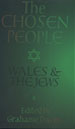
"...this admirable book. Grahame Davies has gathered together a wide range of comments by Gentile Welsh writers on the Jews and by Jewish Welsh writers on the Welsh. They range from a translation of the editor's own moving poem to Merthyr's Jewish cemetery to a selection of Dannie Abse's splendid reminiscences, from Lord Elwyn-Jones's memories of the Nuremberg trials to Mimi Josephson's memorable portrayal of her loyalty to Wales and to Israel. The editor has not shirked the duty of including Welsh anti-semitic comments, the worst example of which is an extraordinarily vicious passage by that Welsh icon, Owen M. Edwards. "The extracts are linked by the editor's sensitive commentary, which is particularly perceptive where Saunders Lewis is concerned. Unlike some Welsh commentators, Grahame Davies is not in the business of exculpation. One of the themes running through the book is the Welsh predeliction for giving Hebrew names to their chapels, names which were frequently adopted as place-names. Perhaps the matter could have been pursued statistically. The Calvinistic Methodists' Handbook of 1911 lists 310 chapels which, between them, bore a total of 51 biblical names. The top ten were Penuel (22), Bethel (20), Carmel (16), Salem (16), Seion (16), Bethania (15) Bethlehem (13), Hermon (12), Tabernacl (11) and Saron (11). At the bottom of the list, with only one apiece, were Berea, Cedron, Bozrah, Dothan, Gerizim, Caesarea, Gilgal, Golan, Gibea, Pharan, and curiously enough, Calfaria. Another theme is the degree to which Welsh philo-semitism – based on the bible-olatry of the country's Nonconformity – inspired Lloyd George to authorize the promulgation of the Balfour Declaration, the declaration central to the process which eventually led to the establishment of the state of Israel. The book contains an extract from a speech Lloyd George made in 1925, when he reminded the Jewish Historical Society of England that 'Palestine was never a land exclusively of Jews'. It is a reminder which the present leaders of Israel should ponder." Dr John Davies ar gwales.com
|
|
Crewyd y wefan gan
Mabmedia |