|
|
Llyfrau/Adolygu: |
 |
BOOKS
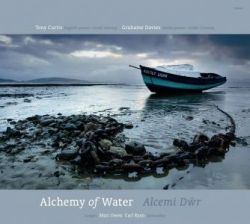
This book celebrates the landscape and people of Wales through poems and photographs. It features English poems by Tony Curtis and Welsh poems by Grahame Davies together with photographs of the Welsh landscape by Mari Owen and Carl Ryan. 'It shows us how water transforms the land, feeds our eyes and illuminates our lives. 'Water us so ubiquitous in our landscape and our legends, in our weather and our words, that there is a danger that we fail to appreciate something which is so essential, so inevitable, so vital' (Grahame Davies).
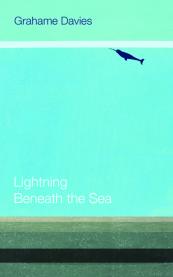
"He is a thoughtful, meditative, serious poet and well worth reading." - Sheenagh Pugh Lightning Beneath the Sea is the first collection of poems in English by Grahame Davies, featuring the work that he has honed over the years as he has read them at literary festivals, conferences and events world-wide. He is already well-known for his prize-winning Welsh-language poetry and fiction, and for his scholarly non-fiction. He brings a native warmth and an intimate, conversational tone to these poems. He favours rhyme and metre in a number of memorable instances like ‘Capital Bookshop’ and ‘Valley Villanelle’; he can use a longer, narrative, free verse line as in ‘Dangerous’; and there are several ‘found’ poems as in the witty ‘The Complete Index of Welsh Emotions’. He observes other nations with the same keen, ironic eye that he casts on his own country and is as concerned with character and the vagaries of relationships as he is with wider cultural concerns.
In the early twenty-first century, the relationship between the West and Islam has, due to recent political events, become the subject of intense study, curiosity and tension. But to understand contemporary anxieties, we need to trace their historical roots. The Dragon and the Crescent does this for one small European nation, revealing for the first time, the full and surprising story of the Welsh relationship with Islam. This extensive study has gathered 200 extracts from a huge range of Welsh literature over a 900-year period. It contains the literary testimonies of Welsh Crusaders, of soldiers and seafarers, of missionaries and merchants, explorers and exploiters, pious pilgrims and hedonistic pleasure-seekers. Ranging from Gerald of Wales's recruiting tour for the Crusades in 1188, up to the recent controversy of the Muhammad cartoons, The Dragon and the Crescent is a fascinating and thought-provoking collection drawn from diaries, journals, dramas, travelogues, novels and poetry. It explores writing from both the languages of Wales by authors including Ann Griffiths, T Gwynn Jones, Cynan, T.E. Lawrence, David Lloyd George, Gwenallt, Richard Llewellyn, Anthony Burgess, Alun Lewis, Alun Richards, Nigel Jenkins, William Owen Roberts, Peter Finch, Robert Minhinnick, Gwyneth Lewis and Horatio Clare. Grahame Davies's informative and acute analyis opens up a whole new field of study, revealing the huge Muslim influence on Wales, and the equally momentous Welsh influence on Islamic lands. It examines responses to the growth of Islam in contemporary Wales, casting a new light on Welsh relations with minority communities, and challenging myths of Welsh tolerance. It will be essential reading for anyone interested in intercultural and interfaith relations. This fascinating and at times unexpected view of Welsh, British and Islamic history is a hugely significant work for contemporary Britain.
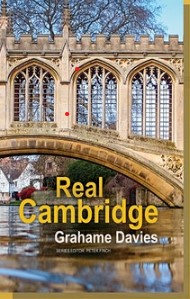
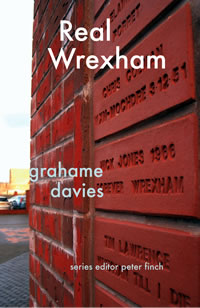
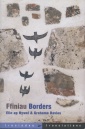
Wrexham: the Eastern Front of Wales. The place where the tide of Saxon invasion rolled in, hit the mountains and stopped. The place where Owain Glyndwr came to get married, where Elihu Yale came to be buried, and where the giants of English football came to be killed. This is a border town where landscapes, accents and identities meet, mingle and merge. A place where mountain meets plain, Wales meets England, and the Mabinogion meets Man U. The biggest town in north Wales gets the Real treatment from novelist and poet Grahame Davies. Born in Coedpoeth, now much-travelled, he's still fascinated by his hometown. Mixing personal experience and memory with history, topography, journalism, and an unflagging interest, Davies looks beyond Wrexham's workaday image and finds something rather special. Real Wrexham's real-life characters include obsessive football fans, an ill-fated racing driver, a soccer-player-turned-TV-psychic, several hard-drinking priests, two high-society lesbians and a werewolf. Among the subjects it features are a mysterious massacre, a mining disaster, a tour of Wrexham's 'Wild West' and a guide to 'Parallel Wrexhams' worldwide. If you thought you knew Wrexham, this book will make you think again.
A moving and thoughtful first novel about passionately held, radical beliefs and their place in the modern world. It intercuts the story of 20th century French philosopher and activist, Simone Weil, with that of 21st century campaigner Meinwen Jones, adrift in post-devolution Wales. ‘Philosophically weighty… it reminds me of Jean-Paul Sartre's 1940s trilogy, Les Chemins de la Liberté [Paths of Liberty]. Here… is set out the Welsh post-nationalistic choice. This is the first post-national novel. - Lord Dafydd Elis-Thomas. ‘… a compelling glimpse of a compelling personality [Simone Weil]. The book is pertinent, provocative and thoroughly entertaining. Anybody with an interest in the way culture and identity inform the lives we make could read the book - and find in it rich nourishment. - Owen Martell.
Poetry, prose, drama and testimony by refugees and asylum seekers, side by side with other writers in Wales, past and present, including: Mahmood Ahmadifard, Alexander Cordell, Kate Bosse-Griffiths, Michael Mokako, Geoffrey of Monmouth, Josef Herman and Soleiman Adel Guemar. The volume is presented in parallel Welsh and English text. All proceeds go to refugee charities.
In his first volume, Adennill Tir, Grahame Davies expressed the experience of the disadvantaged communities of the south Wales Valleys with anger and passion. In his second, Cadwyni Rhyddid, which won the Book of the Year prize, he exposed the irony and double standards of post-devolution Wales with scathing wit. Now, in his third volume, he takes an independent view of contemporary Wales, and has plenty of hard questions as he asks, 'How's the Cause?'
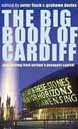
The Big Book of Cardiff, edited by Peter Finch and Grahame Davies, is a new anthology of writing about the city of Cardiff which is celebrating 100 years as a city, and 50 years as the Welsh capital. It contains revealing and entertaining contributions by Niall Griffiths, Dannie Abse, John Williams, James Hawes, Trezza Azzopardi, Sean Burke, Duncan Bush, Gillian Clarke, Anna Davis, Nia Williams, Lloyd Robson, and Emyr Humphreys as well as translated extracts from many Welsh-language writers such as Ifor ap Glyn, Elinor Wyn Reynolds and Owen Martell. Further details can be found on Peter Finch's website below. Peter
Finch
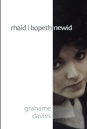
Book of the Year Long List, 2005. This is
the first novel by the satirical poet who came to prominence with his
volume Cadwyni Rhyddid, which won the Book of the Year Prize in
2002, and which challenged the comfortable life of metropolitan media
people with a combination of the satirical and the scathing. In his first
novel, Rhaid i Bopeth Newid, (Everything Must Change) published
by Gomer, the canvas has broadened as he examines the fate of the radical
conscience in post-devolution Wales. This time, there are hard questions
not just for the enemies of the Welsh language, but for its friends, and
not just for politicians, but for campaigners too. The novel intercuts
the story of language campaigner Meinwen Jones with that of the French
philosopher and radical activist, Simone Weil. According to the prizewinning
novelist Owen Martell, Rhaid i Bopeth Newid is "essential reading
material for anyone who wants to get under the skin of the Welsh language
debate – from both sides."
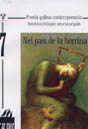
No país
de la brétema.
Antoloxía
de poesía galesa contemporanéa ('Country of the Mists. A
bilingual Galician/Welsh anthology')
Winner of Wales Arts Council Book of the Year Prize, 2002 In his first volume, Adennill Tir (1997), which won the Harri Webb Memorial Prize, Grahame Davies gave his hard-hitting view of the Valleys during the tough years of the nineties. Here, in this biting new volume, he has turned his attention to the city of Cardiff, which is now enjoying the advantages of devolution. It exposes the experience of Welsh-speaking Cardiff from within. Here are the “leather-trousered tribes” who spend more on a haircut than some of their fellow Welsh people earn in a week; here are the “class of the sunglasses” who think Klein is the only Calvin and that oppression is having a cleaning lady who can’t speak Welsh. In this provocative and scathing volume, which includes the sequence “Rhyddid” (“Freedom”) which came second for the National Eisteddfod Crown in 1998, the tensions and irony of life in New Wales are exposed, showing that even freedom has its chains. First and second editions
now both out of print.
(Gomer,
2002) £7.95 Now out of print.
|
|
Website created by
Mabmedia |